
Summer can leave hair dry, rough and more prone to breakage. Sun exposure, pool water, salt and repeated handling of wet hair can all affect its condition. The scalp needs protection too, especially along the part and in thinning areas.
Autumn shedding is a separate issue from damage along the hair lengths. Research describes seasonal changes in shedding, but it does not establish heat alone as their cause.
Our customers' transformations
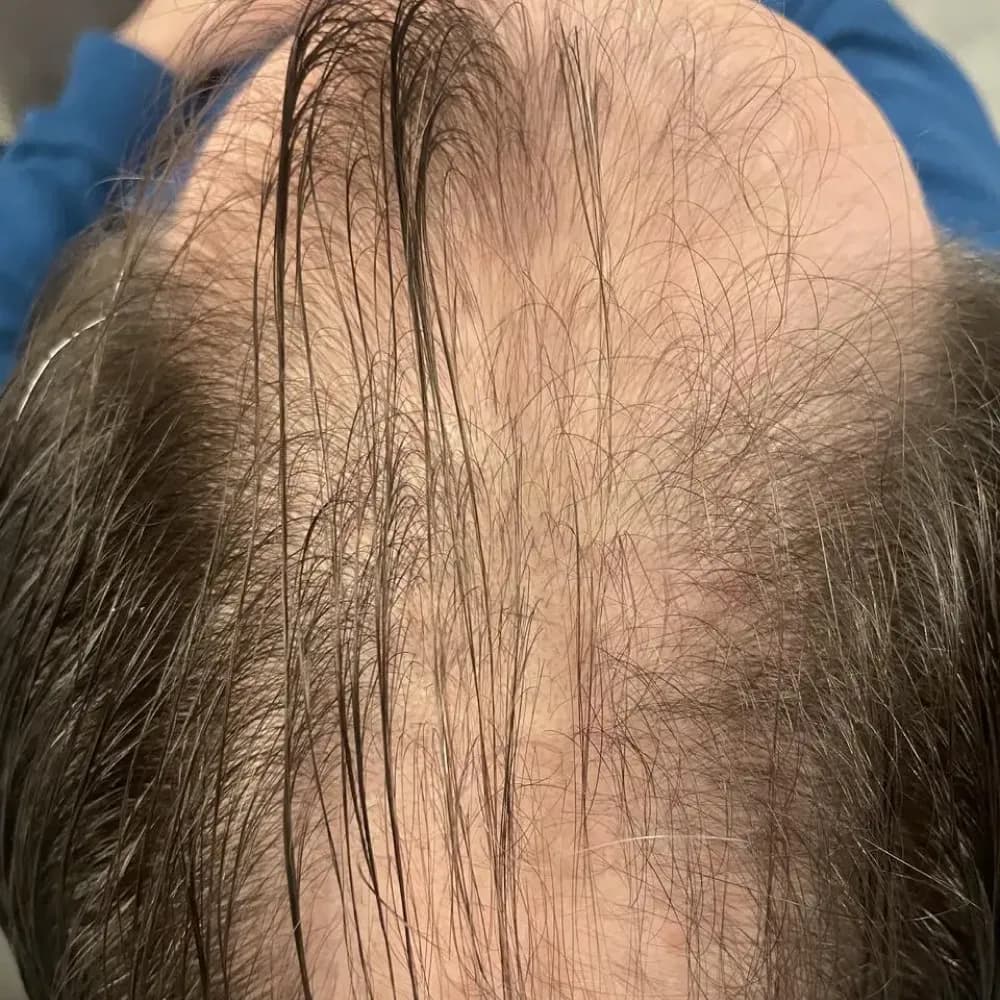
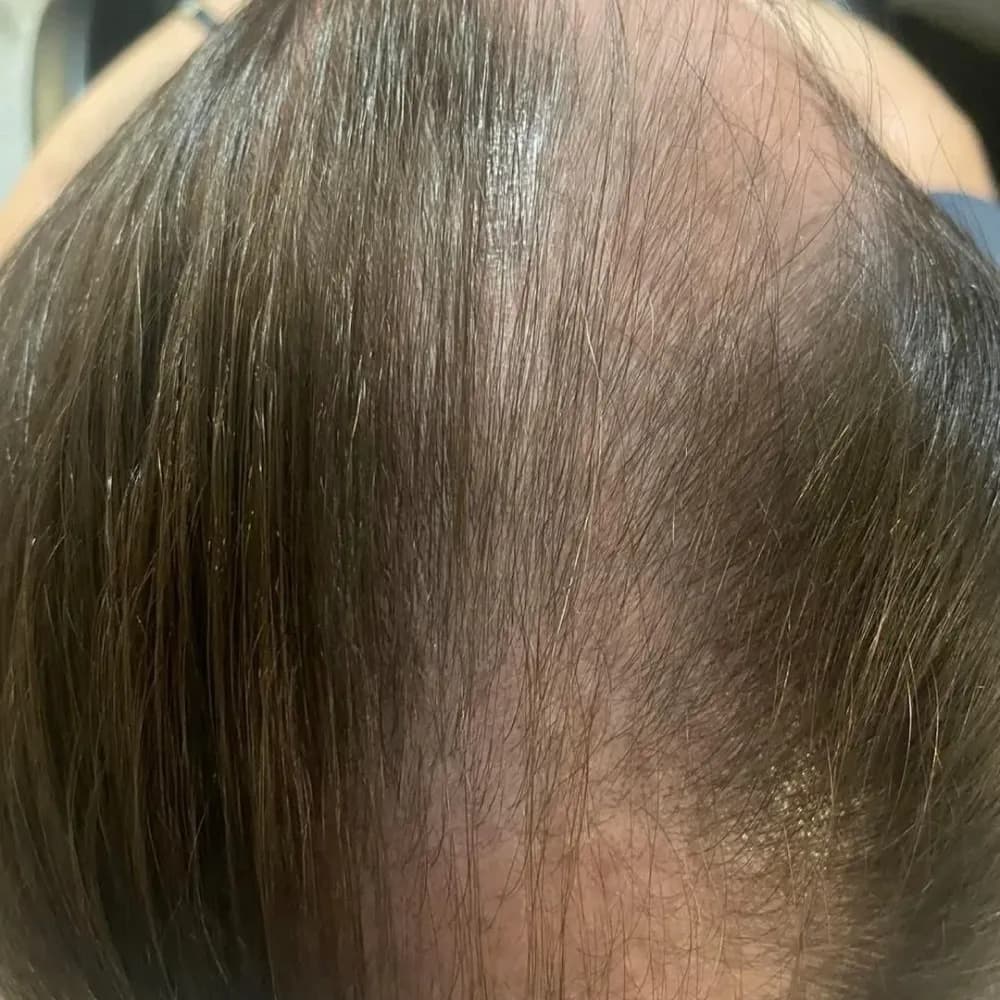
Androgenetic alopecia. Photos taken after 16 weeks of use: Serum daily in the evening, Mask 3x/week. Results are individual and depend on the cause of the hair loss.1 of 12
How sunlight affects hair
UV exposure can damage hair proteins and the outer cuticle. Hair may become rougher, tangle more easily and break. Sunlight also affects pigment, so colour can fade.
Bleached or already damaged hair needs particular care. More chemical processing, high heat and rough handling can add to the damage.
The visible hair shaft does not repair itself like living skin. Conditioner can smooth it and reduce friction. It cannot fully restore its original structure. Split ends need trimming.
Protecting the scalp
Hair does not cover every area equally. The part, temples and a thinning crown can burn in the sun. A hat that covers the head provides useful protection. An appropriate sunscreen can also protect exposed skin when used according to its instructions.
Burning and peeling after sun exposure may be sunburn rather than dandruff. Avoid further exposure and irritating treatments. Seek medical advice for blisters, severe pain or extensive burns.
Sweat and product residue can also cause discomfort. Wash as needed. Persistent itching, redness or greasy scale may need assessment for seborrheic dermatitis.
Pool water and chlorine
Frequent swimming in chlorinated water can affect hair smoothness and strength. Wet hair with clean water before swimming, use a swimming cap if possible and rinse afterwards. Shampoo as needed and condition the lengths.
A green tint after swimming is usually related to copper deposits from the water. Chlorine alone does not dye hair green. If discolouration persists, ask a hairdresser about suitable cleansing rather than using harsh homemade mixtures.
Sea and lake swimming
Rinse salt out with fresh water after swimming in the sea. Salt left on hair can make it feel stiff and rough, increasing pulling during detangling.
Before swimming in a lake, check current bathing-water notices. Algal blooms can irritate skin and cause other health problems. Do not enter water covered by a bathing warning. Clear-looking water alone does not establish safety. In Poland, notices are available through the GIS bathing-water service.
Drying and detangling after a swim
Squeeze water out gently with a towel. Avoid rubbing hard or pulling a brush through knots. Start at the ends and work upwards.
Adapt detangling to your hair. Straight hair may be easier to comb after partially drying. Curly hair is often easier to detangle wet with conditioner. Both approaches should minimise tension.
Limit high-heat styling and tight hairstyles. Do not tightly secure wet hair with an elastic. Short broken pieces suggest damage along the shaft rather than whole hairs being shed.
Why shedding may increase in autumn
Studies have observed seasonal changes in the proportions of hairs at different stages of the cycle. Some people notice more shedding at particular times of year. The timing and extent vary.
Do not attribute every change in density to the season. Fever, rapid weight loss, severe stress or a medication change may precede shedding by several months. Our guide to stress and delayed shedding explains that delay.
Arrange an assessment if density clearly falls, bald patches appear or shedding persists. Pain, sores or marked inflammation should not be left until the season changes.
A simple summer routine
| Situation | Useful step |
|---|---|
| Prolonged sun exposure | Cover the head and protect exposed skin |
| Pool swimming | Wet hair first, use a cap and rinse afterwards |
| Sea swimming | Rinse out salt with fresh water |
| Tangled lengths | Use conditioner and detangle gently from the ends |
| Sweaty or oily scalp | Wash according to need without scratching |
| Marked shedding | Record the change and discuss possible causes with a clinician |
Choose a mask or conditioner for the condition of your hair and follow its instructions. A hair-care product does not replace sunscreen intended for the skin.
Common questions
Does hot weather cause baldness?
Sun can damage hair and burn the scalp. That does not establish ordinary heat exposure as the cause of baldness. Ongoing thinning needs a separate assessment.
Should I wash daily in summer?
There is no single schedule. Wash more often if sweat, oil or residue make it necessary. Match shampoo to the scalp and conditioning to the lengths.
Does a UV hair mist protect my part?
Do not assume so without checking its intended use. A product designed to protect hair may not provide suitable protection for skin. Cover the part or use an appropriate skin sunscreen.
Sources
- Dario et al., Effects of solar radiation on hair and photoprotection, 2015: DOI.
- Kunz et al., Seasonality of hair shedding in healthy women complaining of hair loss, 2009: DOI.
- Nanko et al., Hair-discoloration of Japanese elite swimmers, 2000: DOI.
- Mascaró et al., Green hair, 1995: PubMed.
- American Academy of Dermatology, Tips for healthy hair.
Educational material. This article is for informational purposes and does not replace consultation with a dermatologist or trichologist. Trichovita is a cosmetic care product - not a medicinal product and not a substitute for medical treatment. If you have a diagnosed scalp condition or persistent hair problems, please consult a specialist.
Next quick reads

About the author
Mikolaj Szejnoga
Co-founder of Trichovita
Co-creator of the Trichovita brand, specialist in trichology and cosmetic formulation.
Visit author website