"Wash your hair less often and it will adapt."
How many times have you heard that? From your mum, from a friend, on TikTok, the same advice everywhere. And you know what? It is wrong. Completely.
I am not writing this to be clever. I am writing it because for years I washed my hair according to rules that have no basis in biology. Then I started reading scientific publications and it turned out that practically everything I thought I knew about washing hair was wrong.
This article is long. On purpose. Because the topic is too important to squeeze into three Instagram bullet points. Make yourself a cup of tea, sit back, and give me 15 minutes.
Your Scalp Is Not Just "Skin With Hair"
To understand why most hair-washing advice is nonsense, you first need to know what you are dealing with. The scalp is one of the most biologically active parts of your entire body.
Your Head Is a Grease Factory (and That Is a Good Thing)
Your scalp has the highest density of sebaceous glands anywhere on your body. These tiny factories produce an average of 1.45 mg of sebum per 10 cm² every 3 hours. Non-stop. 24 hours a day. Regardless of whether you washed your hair this morning or a week ago.
And here is the crucial thing no influencer tells you: sebum is not dirt. It is your natural protective shield.
These oily substances, lipids, fatty acids, squalene, waxes, form a layer on the skin surface that scientists call the hydrolipid mantle. A thin, invisible layer with a pH of 4.5–5.5 that:
- Keeps bacteria and fungi out
- Locks moisture in the skin (so your scalp does not become dry and flaky)
- Provides a home for billions of beneficial microorganisms
The problem? Most shampoos strip this layer completely. And that is where the spiral of problems begins.
An Entire Ecosystem Lives on Your Head
Sounds odd? Trillions of microorganisms, bacteria and fungi, live on your scalp. And before you think "gross, that is why I need to wash more often", stop. Those organisms should be there. They are your personal protective ecosystem, known as the scalp microbiome.
The latest 2025 research shows something fascinating: the way you wash your hair, how often, with what, how vigorously, directly alters the bacterial populations on your skin. Some shampoos stabilize this ecosystem. Others wreck it.
The Microbiome and Hair Loss: This Is Not Theory
Five years ago nobody connected the microbiome with baldness. Today it is one of the hottest topics in dermatology, and I will be honest, the research findings surprised me.
Your Bacteria Can Predict Baldness
In 2025, scientists created something called MiSCH, a "scalp health index" based on bacterial analysis. It turned out that this index can not only detect androgenetic alopecia, but even identify people at risk of going bald before they lose a single hair.
Moreover, microbiome disruptions were not limited to the areas where hair was falling out. They covered the entire head. The greater the disruption, the faster the hair loss.
The Gut–Hair Connection: Strange, but True
There is something called the "gut–scalp axis." It sounds like science fiction, but it is a confirmed mechanism: the state of your gut microbiome affects your scalp health. Through hormones, inflammatory cytokines, and immune responses.
This explains why your scalp suddenly starts flaking after antibiotics. Why stress leads to clumps of hair in the drain. Why a change in diet improves hair condition. The cause is in the gut, but the effects show up on your head.
How Often Should You Wash Your Hair? Debunking 3 Big Myths
Enough biology. Let us get to the specifics, that is probably why you are here.
Myth 1: "Frequent Washing Makes Your Hair Get Oily Faster"
Probably the oldest myth in hair-care history. The logic seems simple: you wash, strip the oil, skin produces more, vicious cycle. But that is not how it works.
Sebaceous glands respond primarily to hormones, mainly androgens. Not to whether you washed your hair yesterday. Sebum is produced on a fixed cycle and reaches the skin surface about 8 days after being made. You cannot "train" this process.
So where does the impression come from? If you strip the lipid mantle every day with an aggressive detergent, the skin responds with a slight increase in sebum production. But it is not because you wash too often, it is because you wash too harshly. The difference is enormous.
Myth 2: "The Less Often You Wash, the Healthier Your Hair"
This myth is not only wrong, it is potentially harmful.
Sebum that accumulates on the scalp contains DHT (dihydrotestosterone). This is the hormone directly responsible for miniaturization of hair follicles, the primary cause of androgenetic alopecia.
Think of it this way: the longer sebum with DHT sits on the skin, the longer your follicles are exposed to the hormone that destroys them. The American Hair Loss Association explicitly warns against the "no-wash" trend, and with good reason.
Not washing your hair does not regenerate it. It gives DHT more time to damage it.
Myth 3: "SLS-Free Shampoo Does Not Clean Properly"
A favourite argument of bargain-shampoo fans. "If it does not lather, it does not clean."
A foamy shampoo is not a shampoo that cleans better. It is a shampoo that contains a strong detergent. And a strong detergent = destroyed hydrolipid mantle = wrecked microbiome = problems.
There are dozens of gentle surfactants that cleanse the scalp without the napalm effect. Cocamidopropyl betaine, decyl glucoside, sodium cocoyl glutamate, they clean effectively without destroying the barrier. No lather does not equal no cleanliness.
How Often to Wash: A Quick Guide
| Your scalp type | How often to wash | Why |
|---|---|---|
| Oily (greasy within 24 h) | Daily or every 2 days | Removes excess DHT; but use a gentle shampoo! |
| Normal | Every 2–3 days | The sweet spot, clean without destroying the barrier |
| Dry / sensitive | Every 3–4 days | Protects an already weakened mantle; gentle surfactants |
| With eczema / psoriasis | Per dermatologist | Individual approach; medicated shampoos |
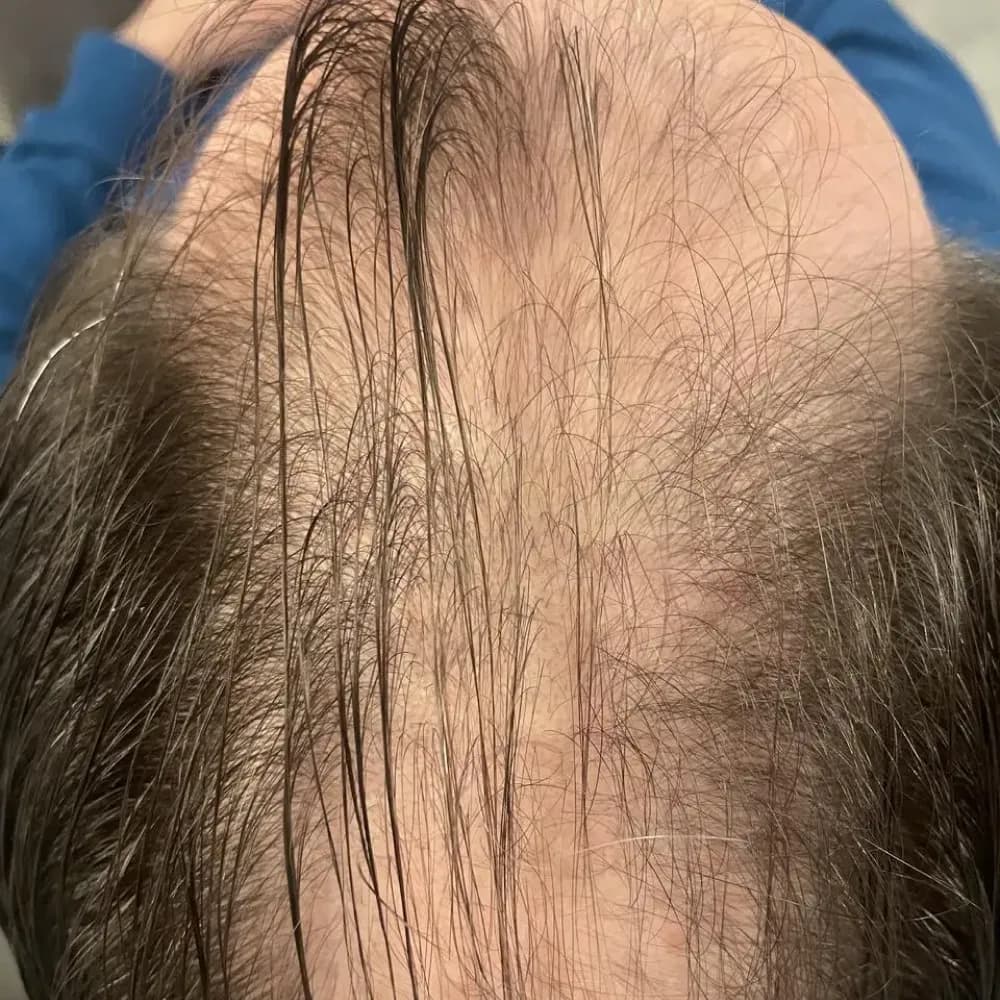
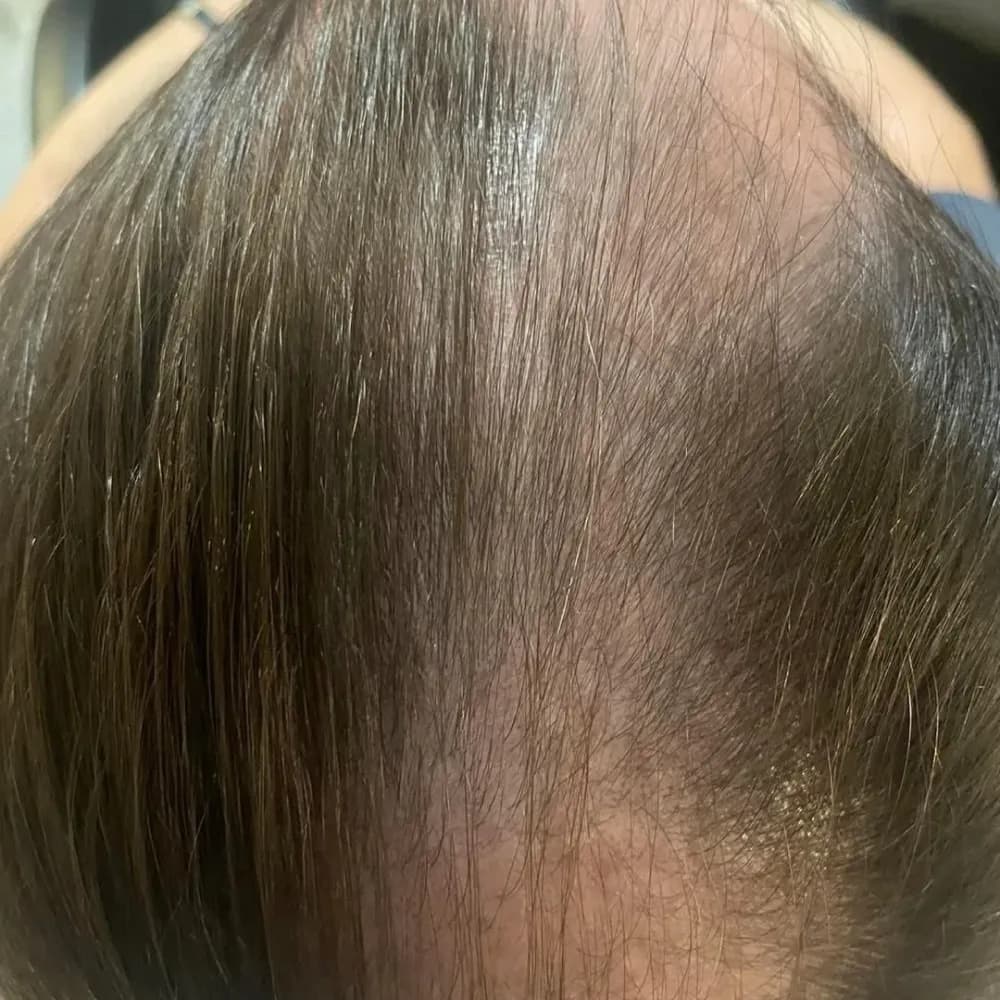
| With hair loss | Every 1–2 days | Minimizes follicle exposure to DHT |
Why the pH of Your Shampoo Matters Enormously
When someone tested 123 shampoos on the market, it turned out that 62% had a pH above 5.5. Some even 8 or 9. And the optimal scalp pH? 4.5–5.5.
What does a shampoo with pH 7, 8, or 9 do?
It opens the cuticle scales like umbrellas in the rain. Hair becomes porous, rough, and loses protein and moisture. The scalp loses its acidic shield, and pathogenic bacteria say "thank you, come right in."
A shampoo with the right pH? It closes the cuticle, protects the barrier, and lets the microbiome work in peace. This is not marketing, it is chemistry.
SLS and SLES: What They Really Do to Your Hair
Sodium Lauryl Sulfate (SLS) is found in roughly 80% of shampoos. It is cheap, lathers beautifully, and... has a dark side.
When researchers studied what happens to SLS after it is applied to skin, they found it deposits inside hair follicles. And even at a concentration of just 1%, it irritates the skin and increases transepidermal water loss. The latest 2025 research confirmed that SLS and SLES cause measurable damage to the protein structure of hair.
But, and I will be upfront here, there is no evidence that SLS directly causes baldness. That is an important distinction. SLS damages the outer layer of the hair and the skin barrier, but does not attack the follicle itself.
However, a damaged barrier is an open door to inflammation, microbiome disruption, and prolonged exposure to DHT. An indirect effect, but very real.
How to Wash Your Hair Properly: Step by Step
Enough theory. Here is what you should do in the shower.
Temperature: Warm, Not Hot
Hot water dissolves sebum more effectively, but too effectively. It strips the entire lipid mantle. Warm water (36–38 C) is plenty. At the end: 15 seconds of cool water. It closes the cuticle, adds shine. Simple.
Double Wash: Yes, Twice
The first wash dissolves sebum and surface contaminants. Only the second wash truly cleanses the skin and allows active ingredients to take effect.
- First: 30–60 seconds, light massage, rinse
- Second: 1–2 minutes, thorough circular massage with fingertips
Massage: This Is Not Optional
2–3 minutes of massage with fingertips (not nails!) improves micro-circulation in the scalp. More blood = more oxygen and nutrients reaching the follicles. It is one of the simplest things you can do, and one of the most effective.
Rinsing: Longer Than You Think
Most people rinse shampoo for 15 seconds. Not enough. Surfactant residue on the skin continues to irritate, disrupts pH, and can itch. Rinse for at least one minute. The skin should feel smooth but not slippery.
Exfoliation: From Time to Time
Enzymatic (not with nut shells!), once a month. For dandruff or seborrheic conditions, once a week. For sensitive skin, once every 2–3 weeks. No more often, or you will disturb the microflora.
Drying: Never Rub
Microfibre towel, squeeze water out, do not rub. Rubbing wet hair opens the cuticle and causes breakage. Blow dryer? Medium heat, at least 15 cm from the scalp. Never on maximum.
What to Apply After Washing: The Window Most People Waste
And now the most important part. You have just washed your hair. You have removed the sebum, opened the skin. For the next 15–30 minutes, the scalp is maximally receptive to whatever you put on it.
This is exactly the moment when a serum has a chance to truly work. Not just "slightly moisturize the surface", but reach the follicles.
Liposomes, microscopic capsules built similarly to natural skin cells, enable the delivery of active ingredients directly to the hair follicles. Not into the bloodstream, not into the surrounding epidermis, into the follicles. That is why a liposomal formula is so important.

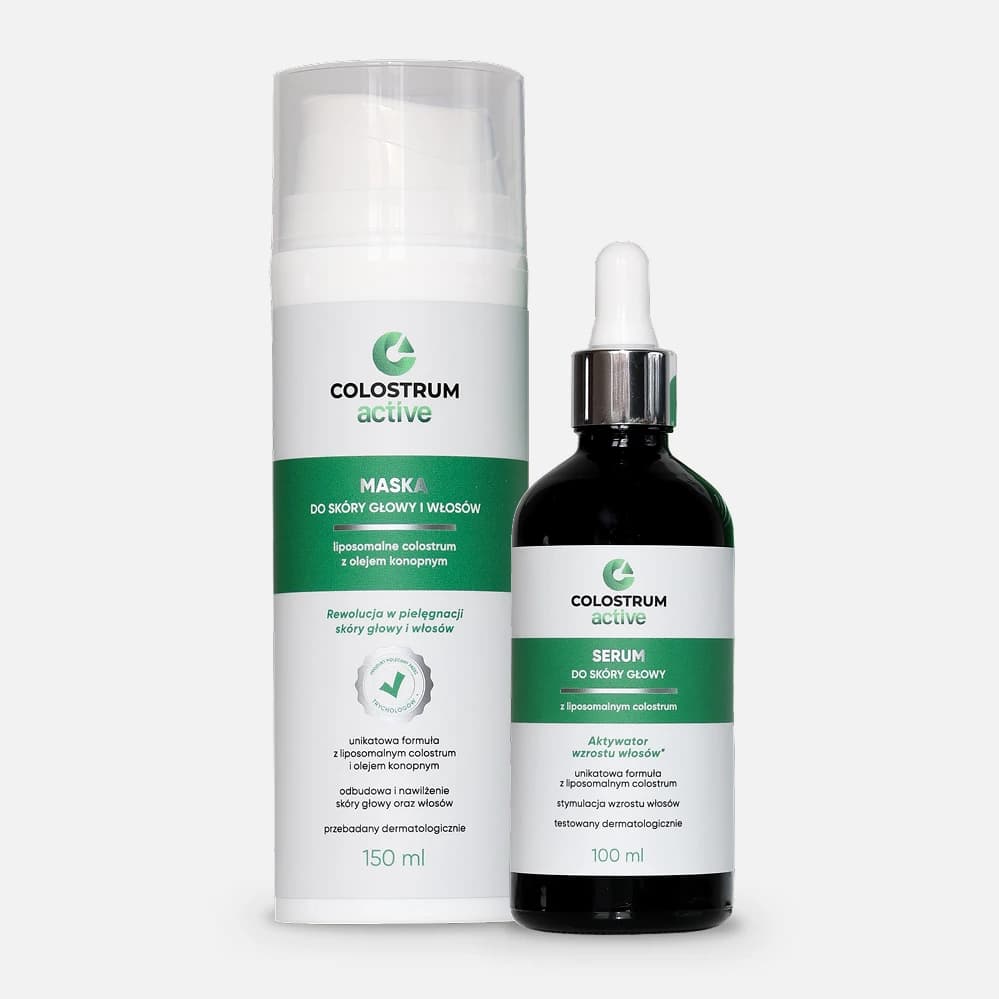
Colostrum Active serum with liposomal colostrum
Regenerating serum for daily use.
Apply a mask 1–2 times a week, on cleansed, damp scalp. 15–20 minutes, that is how long the ingredients need to penetrate.
Your New Routine: 5 Simple Rules
1. Wash your hair as often as you need. Do not "train" it. If your skin is oily or you are experiencing hair loss, even every day.
2. Shampoo without SLS/SLES, pH 4.5–5.5. Do not judge it by its lather, judge it by how your skin feels.
3. Double wash, 2–3 minutes of massage, at least one minute of rinsing. Warm water, cool at the end.
4. Serum on the scalp within 15–30 minutes of washing. Mask 1–2 times per week.
5. Exfoliation once a month. Enzymatic, not mechanical.
And most importantly: stop listening to Instagram. Start listening to your scalp.
Frequently Asked Questions
How often should I really wash my hair?
As often as your scalp tells you to. There is no biological "ideal" number. People with oily skin or hair loss can wash every day, washing does not "train" the sebaceous glands to produce more. People with dry scalp may wash 2–3× a week. The relevant signal is how your scalp feels, not what a calendar dictates.
Are SLS and SLES sulfates actually bad?
For most people, yes, but for a specific reason. SLS/SLES are powerful surfactants that strip the hydrolipid mantle and disturb the scalp microbiome. The short-term effect is "squeaky clean"; the medium-term effect is rebound oiliness, irritation and barrier weakening. They are fine for cleaning a kitchen counter, not for daily contact with living skin. Look for cocamidopropyl betaine or sodium cocoyl isethionate instead.
What does the pH of shampoo do for my scalp?
Your scalp's natural pH is 4.5–5.5 (slightly acidic). A shampoo above pH 6 raises the cuticle, weakens the hydrolipid mantle and shifts the microbiome, three small insults that compound. A shampoo matched to skin pH (4.5–5.5) does the job without breaking the barrier. The label rarely shows pH; ask the brand directly or run a paper-strip test.
Why does my scalp get oilier when I wash less often?
It does not, but it feels that way. Sebaceous glands produce roughly 1.45 mg/10 cm² every 3 hours regardless of how recently you washed. What changes is the visible accumulation: a week of unwashed sebum looks dramatic, but the daily production rate is constant. "Training" your scalp by waiting longer between washes does not slow the glands down; it just lets sebum and dead cells build up and frustrate you.
Cold water rinse at the end: does it actually help?
Yes, marginally. Cool water (not ice cold) helps the cuticle lie flatter, which improves shine and reduces frizz. It does not "close pores" on the scalp, that is a myth, but it does constrict the upper blood vessels briefly. The most consistent benefit is mechanical: smoother hair surface after a final cool rinse.
References
This article is based on dermatology guidance and peer-reviewed publications:
- American Academy of Dermatology Association, Tips for healthy hair: aad.org
- Barbosa et al., The Impact of Shampoo Wash Frequency on Scalp and Hair Conditions, 2021: PMC
- Gavazzoni Dias et al., The Shampoo pH can Affect the Hair: Myth or Reality?, 2014: PMC
- Bondi et al., Human and Environmental Toxicity of Sodium Lauryl Sulfate, 2015: PubMed
- Li and Hoffman, Topical liposome delivery of molecules to hair follicles in mice, 1997: PubMed
For the next step, read liposomes in hair care and dandruff or seborrheic dermatitis.

Colostrum Active: Bundle Serum + Regenerating Mask
A complete set for scalp and hair regeneration.
Educational material. This article is for informational purposes and does not replace consultation with a dermatologist or trichologist. Trichovita is a cosmetic care product — not a medicinal product and not a substitute for medical treatment. If you have a diagnosed scalp condition or persistent hair problems, please consult a specialist.
Discover our products!
We created them with real trichological patient problems in mind.

About the author
Mikolaj Szejnoga
Co-founder of Trichovita
Co-creator of the Trichovita brand, specialist in trichology and cosmetic formulation.
Visit author website