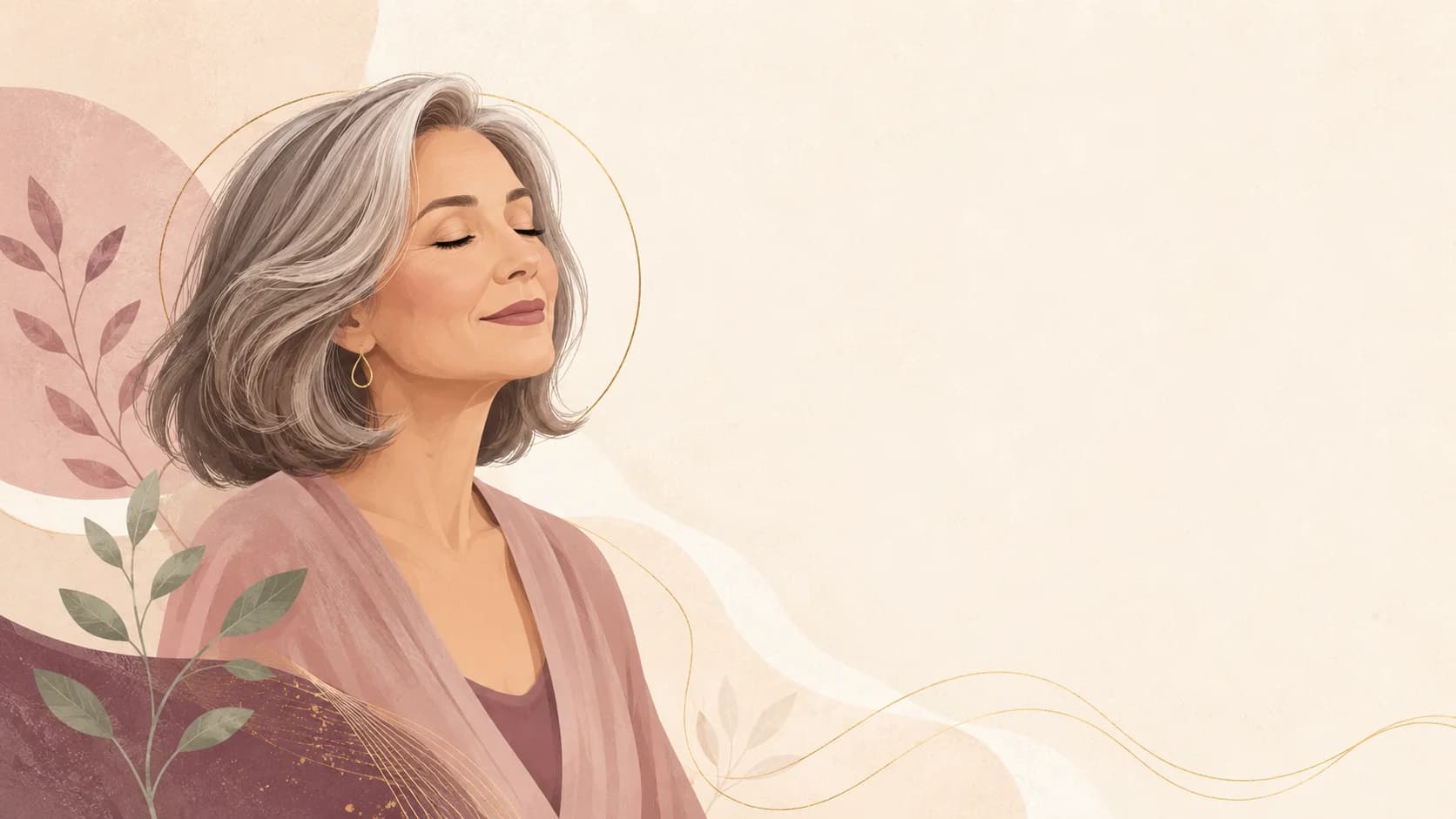

Around menopause, hair may become finer, drier or less dense. Hormonal changes matter, but they do not explain every case of shedding. Thyroid disease, nutritional deficiencies, medication effects or pattern hair loss may also be present.
It helps to distinguish hairs being shed from follicles from damage along the lengths. These problems can occur together but need different care.
Our customers' transformations
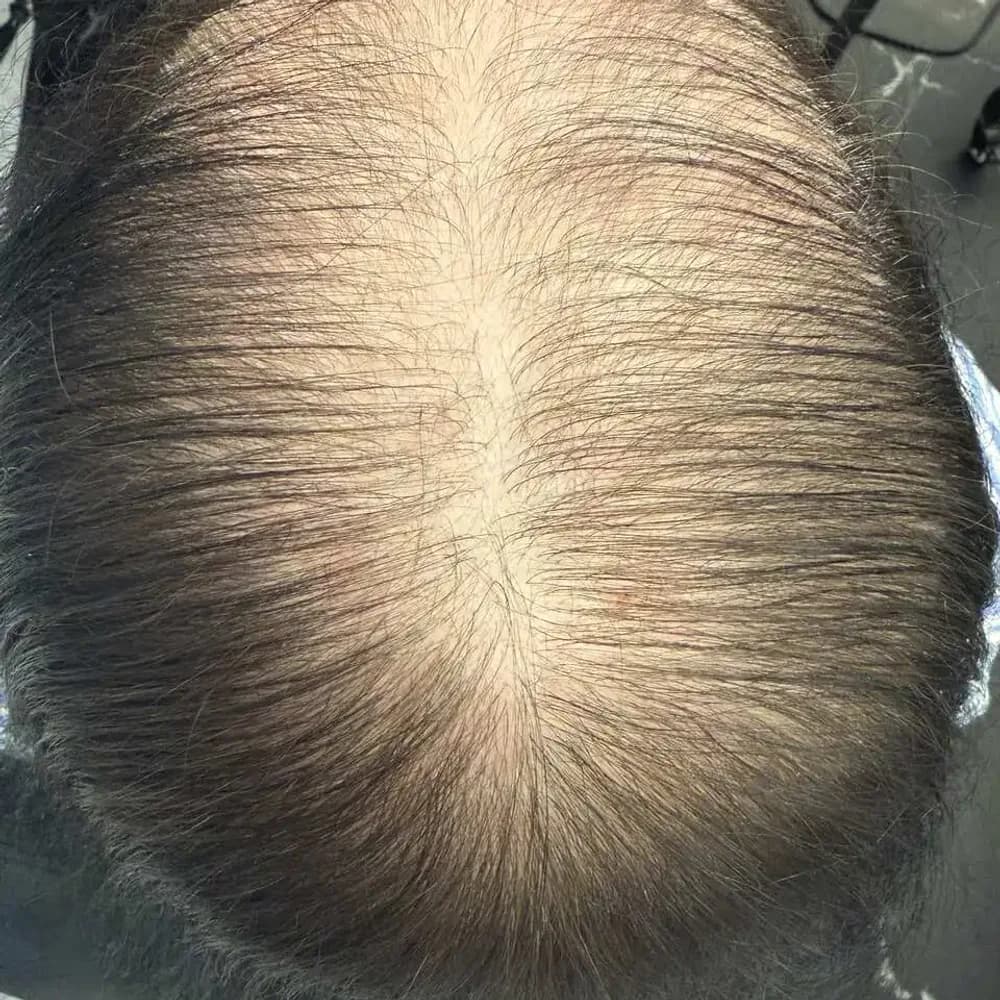
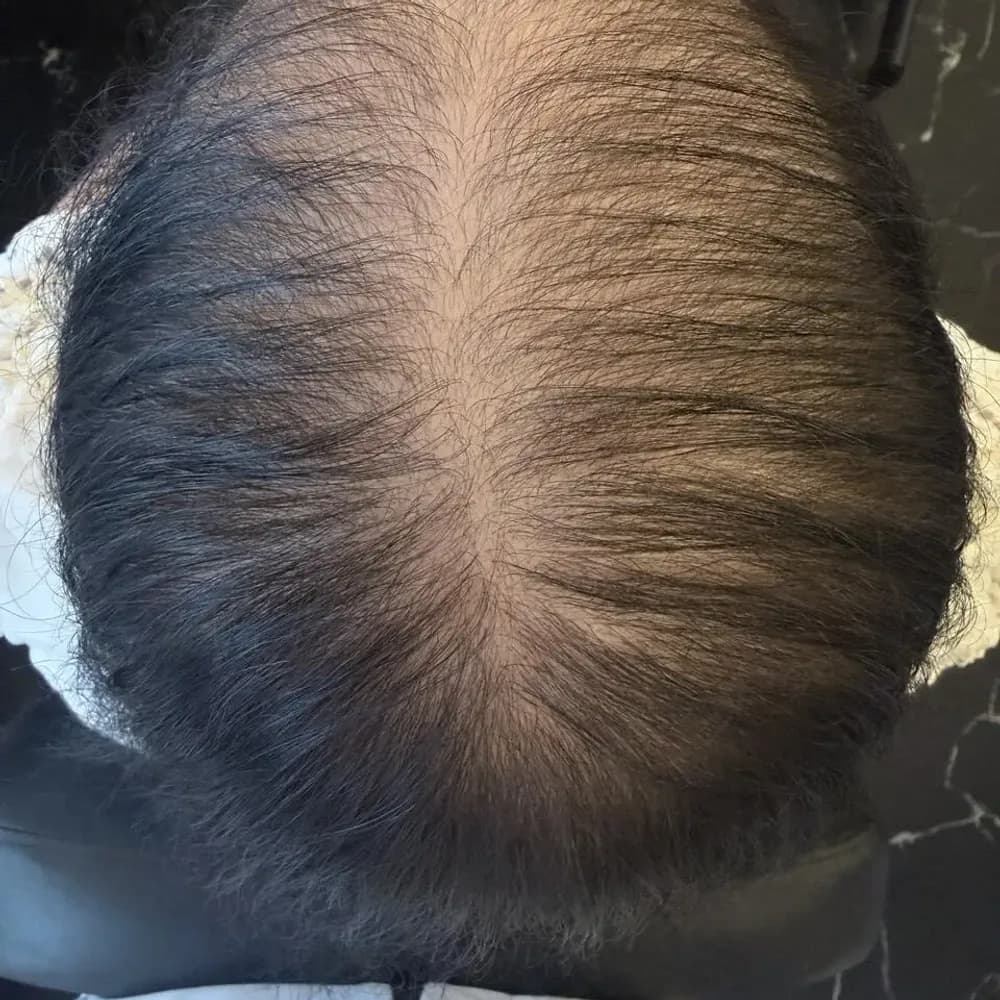
Female pattern hair loss. Photos taken after 14 weeks of use: Serum daily, Mask 3x/week. Results are individual and depend on the cause of the hair loss.1 of 12
What changes during this period?
Hormone levels, including oestrogen, change during the menopausal transition. Skin and follicles also change with age. Some women notice finer hair and more visible thinning.
This does not happen in the same way to everyone. A hormone result alone cannot predict how much the appearance of the hair will change.
Skin may become drier or more sensitive. Marked redness, persistent itching or scaling should still be assessed for other causes rather than automatically attributed to menopause.
What the pattern can tell you
| Observation | What may need assessment |
|---|---|
| A gradually widening part or thinner crown | Female pattern hair loss |
| Sudden shedding across the scalp | Earlier illness, stress, dietary change, medicines or other triggers of telogen effluvium |
| Short, uneven hair fragments | Breakage along the lengths |
| Receding hairline with eyebrow loss, pain or burning | Conditions needing prompt dermatology review, including scarring alopecia |
The table helps describe the change; it does not diagnose it. Pattern hair loss and telogen effluvium can coexist. Stress-related shedding may appear months after a trigger.
How the cause is investigated
A clinician asks when the change began and how it has progressed. Medicines, ongoing conditions, diet and heavy bleeding before menopause may be relevant.
Scalp examination, often with trichoscopy, helps assess hair thickness and the distribution of thinning. Blood tests are chosen when the history suggests a reason for them. A full hormone panel is not automatically needed because hair looks thinner.
Depending on the symptoms, tests may include a blood count, ferritin or thyroid function. Results need to be interpreted alongside the examination rather than against one online “ideal hair” value.
Does menopausal hormone therapy help hair?
Its effects on hair are being studied, but the evidence does not allow a promise of regrowth for every woman. It is not routinely started solely to treat thinning hair.
A clinician weighs menopausal symptoms, health history, benefits and risks. If you already use hormone therapy, do not change it yourself because of your hair. Report the change to the prescribing clinician.
A diagnosed hair-loss condition may need separate treatment, such as an appropriate minoxidil preparation. The choice depends on the diagnosis and contraindications.
Reducing dryness and breakage
Choose shampoo for the scalp and conditioner for the lengths. Wash as often as oiliness and comfort require. Longer gaps do not stop shedding from follicles.
Squeeze water out gently after washing and use conditioner if it helps detangling. Reduce high-heat styling and chemical treatments that leave hair brittle. Work through tangles without pulling.
If the hair grows at the roots but never seems longer, breakage may be part of the problem. Protecting the lengths can improve appearance without changing follicle activity.
Choosing cosmetics
Choose a product for a specific need, such as dryness, tangling or cleansing. A label saying “for menopause” does not establish whether it suits your scalp.
Introduce new products one at a time. Stop if burning, itching or redness appears. Avoid ingredients you know you are allergic to.
The serum and mask available from Trichovita contain liposomal bovine colostrum. They are cosmetic care products, not hormone replacement or treatment for alopecia. Avoid them if you have a cow’s milk protein allergy.
When to seek advice
Arrange an assessment if thinning progresses or shedding is much greater than before. Pain, sores, distinct bald patches and eyebrow loss need earlier review. Do not wait for menopause to “finish” before having those changes checked.
Common questions
Can density recover after menopause?
That depends on the cause and the condition of the follicles. Treatment can help some changes, but a full return to previous density is not guaranteed.
Does everyone need a hair supplement?
No. Supplements should address an actual indication. Taking several products without a reason can create excessive intakes and does not guarantee better hair.
How soon should treatment be assessed?
Agree a review point with your clinician. Changes in density usually take months. Photographs with similar lighting and styling are more useful than checking the part every day.
Sources
Educational material. This article is for informational purposes and does not replace consultation with a dermatologist or trichologist. Trichovita is a cosmetic care product - not a medicinal product and not a substitute for medical treatment. If you have a diagnosed scalp condition or persistent hair problems, please consult a specialist.
Next quick reads

About the author
Mikolaj Szejnoga
Co-founder of Trichovita
Co-creator of the Trichovita brand, specialist in trichology and cosmetic formulation.
Visit author website