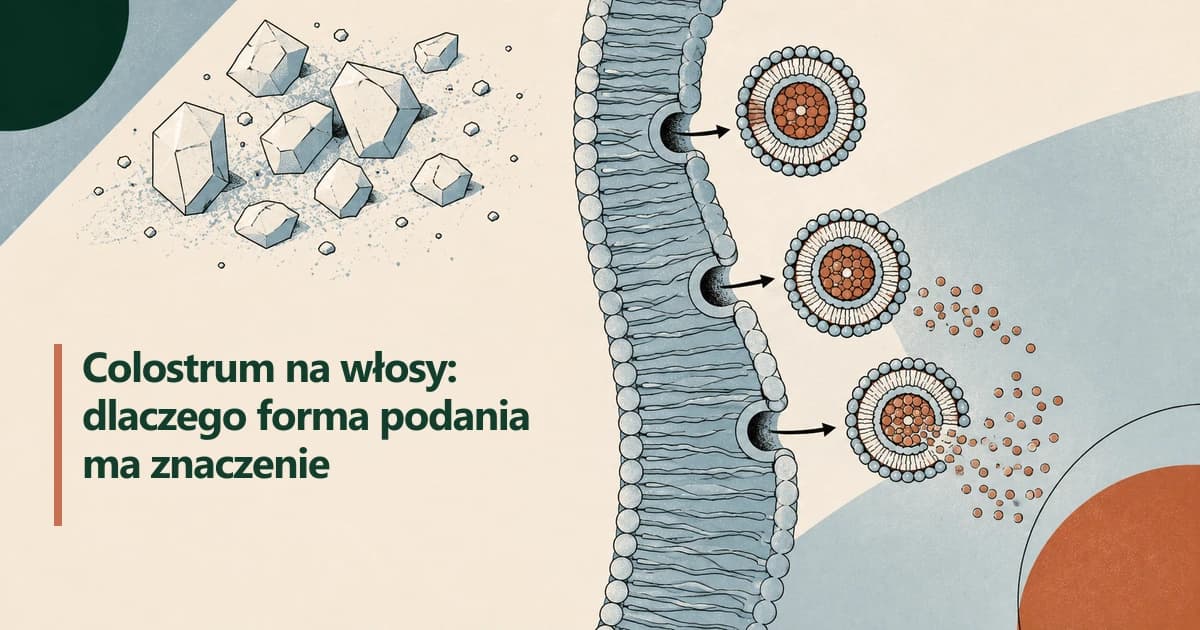

“Freeze-dried” and “liposomal” describe different processes. Freeze-drying removes water from a frozen ingredient. Liposomes are small vesicles that can carry ingredients in a product. Both technologies can be used together.
Neither term, on its own, proves that a serum causes hair regrowth. Each tells you something about how an ingredient was prepared.
Our customers' transformations
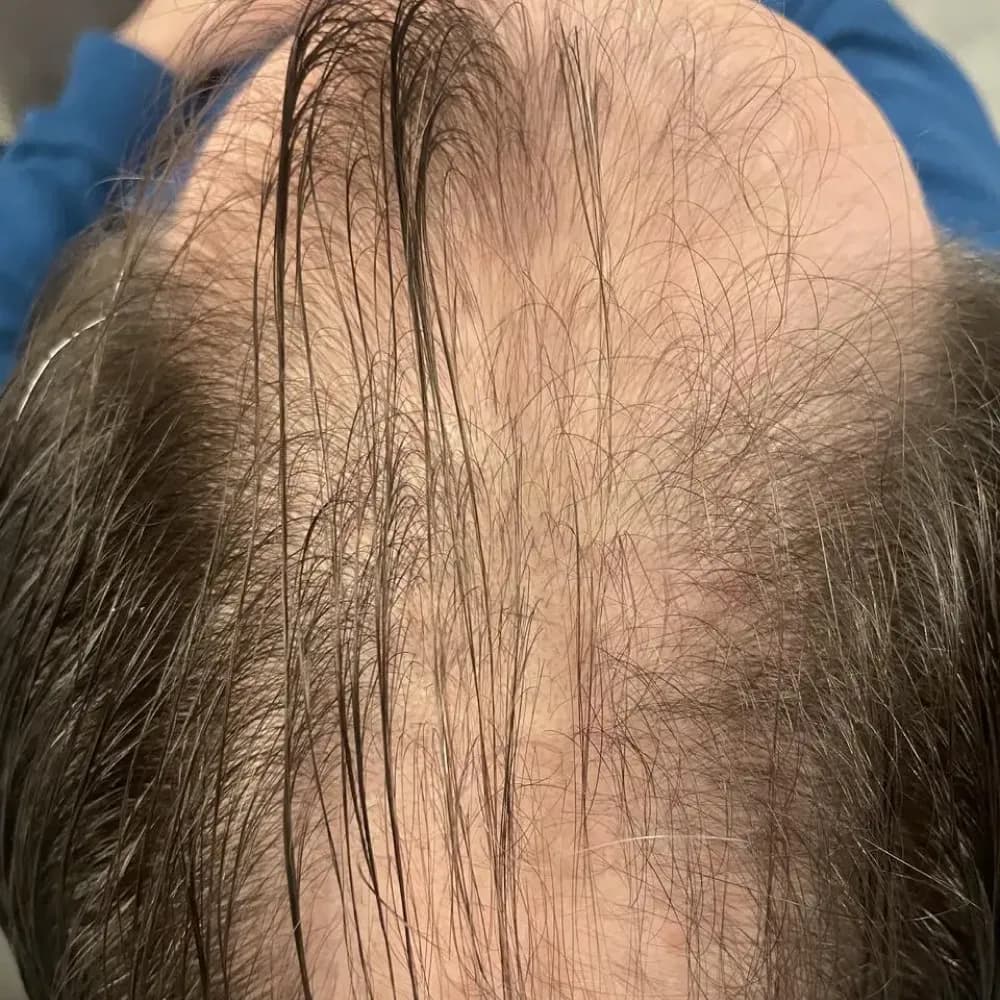
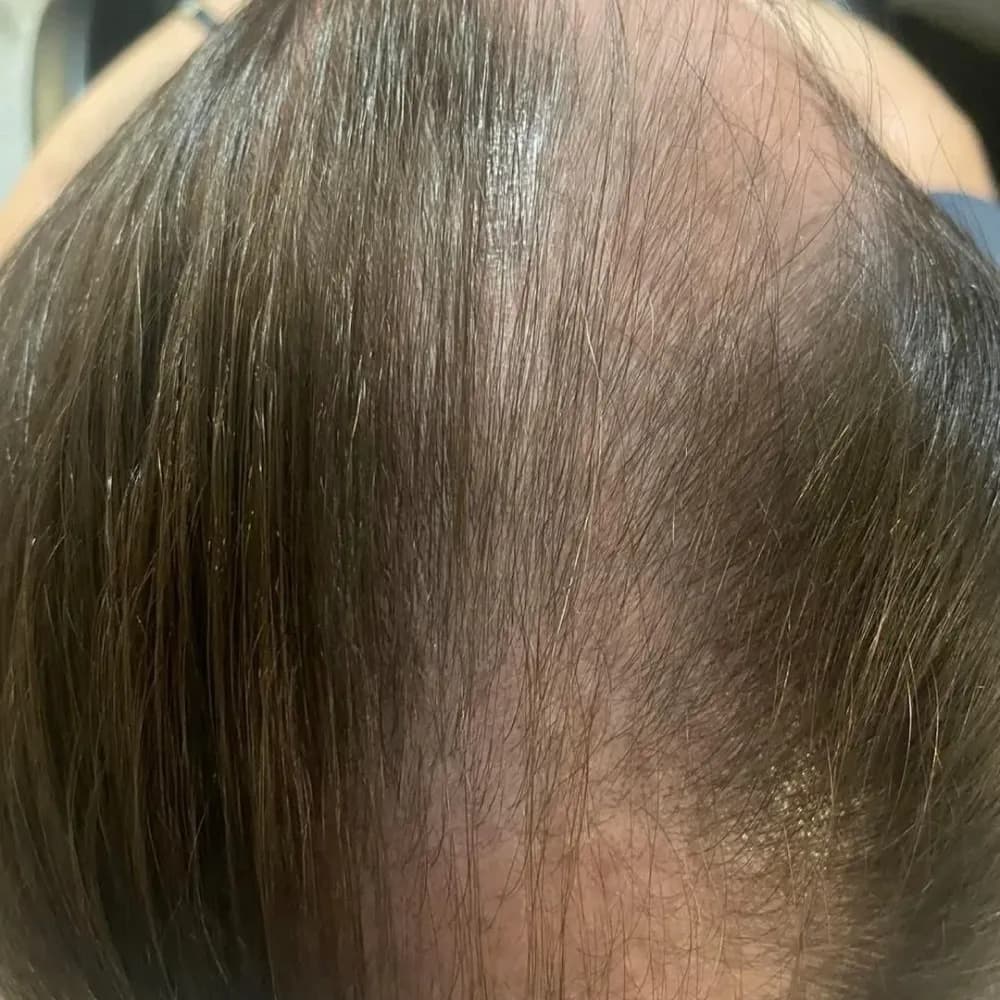
Androgenetic alopecia. Photos taken after 16 weeks of use: Serum daily in the evening, Mask 3x/week. Results are individual and depend on the cause of the hair loss.1 of 12
Why colostrum is used in cosmetics
Bovine colostrum contains lactoferrin, antibodies and growth factors. Some of these substances have been studied in relation to hair follicles.
An experiment on an isolated protein does not describe the effect of a complete serum. The ingredient’s amount and stability matter, as do the other components and its ability to reach the intended site.
Our review of colostrum research explains the difference between laboratory findings and evidence from people.
What freeze-drying does
The ingredient is frozen, then water is removed under reduced pressure. The resulting dry material can be easier to store and use in manufacturing.
Freeze-drying can help preserve sensitive ingredients. It does not guarantee that every protein retains its full activity. Processing conditions, protective additives and storage all affect the result.
This process does not, by itself, carry an ingredient deeper into the skin. It describes preservation rather than what happens after a cosmetic is applied.
What liposomes can change
Liposomes have a lipid shell and can hold selected substances. They may help protect an ingredient or alter its release and distribution after application.
Liposomes vary in size, shell composition and stability. Their behaviour also depends on what they contain and the rest of the formula. A study of one carrier cannot establish the performance of every product labelled “liposomal”.
Why the skin barrier matters
The outer skin layer limits the passage of substances. Large proteins, including many found in colostrum, do not pass easily through healthy skin.
The “500 Dalton rule” describes a general relationship between molecular size and skin penetration. It is not an absolute cut-off that predicts the performance of a whole product. Other properties, skin condition and the delivery method also matter.
Adding liposomes does not prove that proteins reach the base of a hair follicle in an effective amount. That would require suitable measurements of the actual formulation.
Comparing the two processes
| Question | Freeze-drying | Liposomes |
|---|---|---|
| What does it describe? | Drying and preserving an ingredient | Placing an ingredient in a carrier |
| What may it help with? | Storage and preservation | Protection, release or distribution |
| What affects the result? | Processing, additives and storage | Carrier design and the whole formula |
| Does it prove hair regrowth? | No | No |
| Can the methods be combined? | Yes | Yes |
What the label can tell you
The INCI list identifies cosmetic ingredients. It usually does not reveal the exact amount of colostrum or how much of it is held inside liposomes.
Lecithin or phospholipids on the list are not proof of intact liposomes. These substances can serve other purposes in a formula. Details of the technology need supporting information from the manufacturer.
Before buying, check the intended application area, whether the product should be rinsed off and how often it should be used. Ask whether any reported test concerns the finished product and the benefit being advertised.
Choosing a product for your scalp
A suitable product should be comfortable to use. Stop if it causes burning, redness or itching. Avoid ingredients you know you are allergic to. Cow’s milk protein allergy is a reason to avoid bovine colostrum, including liposomal forms.
The serum and mask available from Trichovita contain liposomal colostrum. They have different instructions and are intended for cosmetic care. Persistent shedding or progressive thinning needs a separate assessment of the cause.
Common questions
Is freeze-dried colostrum worse than liposomal colostrum?
The terms do not describe competing categories. One concerns preservation and the other a carrier. Product quality depends on the complete formula and evidence about its performance.
Does freeze-drying destroy all proteins?
No. It is used to preserve sensitive materials, but the level of preservation depends on the process and storage conditions.
Does a higher percentage mean a better result?
Not necessarily. The percentage may refer to dry material, a solution or a premixed ingredient. A larger amount does not automatically mean greater effectiveness or better tolerance.
Can liposomal colostrum replace hair-loss treatment?
No. A delivery technology does not turn a cosmetic into an established treatment. Consult a dermatologist if thinning is progressing.
Sources
- Bos and Meinardi, The 500 Dalton rule for the skin penetration of chemical compounds and drugs, 2000: DOI.
- Yalçıntaş et al., Revealing the Potency of Growth Factors in Bovine Colostrum, 2024: DOI.
- Akl et al., Phospholipid-Based Nanovesicles as Game-Changers in Transdermal Drug Delivery, 2024: DOI.
- Karunnanithy et al., Effectiveness of Lyoprotectants in Protein Stabilization During Lyophilization, 2024: DOI.
Educational material. This article is for informational purposes and does not replace consultation with a dermatologist or trichologist. Trichovita is a cosmetic care product - not a medicinal product and not a substitute for medical treatment. If you have a diagnosed scalp condition or persistent hair problems, please consult a specialist.
Next quick reads

About the author
Mikolaj Szejnoga
Co-founder of Trichovita
Co-creator of the Trichovita brand, specialist in trichology and cosmetic formulation.
Visit author website