
Bovine colostrum contains proteins that researchers have studied in connection with hair growth. Some experiments on cells and mice have produced promising results. They do not establish that a colostrum cosmetic treats hair loss in people.
To understand a study, check what was tested, how it was given and who received it. An isolated substance used in a laboratory is different from a finished serum applied to the scalp.
What is bovine colostrum?
Colostrum is the first mammary secretion produced after birth. It supplies nutrients and substances that support the newborn’s immune system. It contains antibodies, lactoferrin and growth factors, among other components.
Growth factors are proteins involved in communication between cells. Some also help regulate hair follicles. This explains the research interest, but the presence of a protein in an ingredient does not tell us how a cosmetic will perform.
The amount, stability and preparation of that ingredient matter. Researchers also need to establish whether it reaches the intended site of action.
IGF-1 and the hair follicle
IGF-1 helps regulate cell growth and survival. Cells in the dermal papilla, a structure at the base of the hair follicle, produce it.
Research describes links between IGF-1 and the hair cycle, including differences in cells taken from balding and non-balding areas. These observations help explain possible mechanisms. They do not show that applying colostrum restores IGF-1 in a human follicle or reverses hair loss.
What the lactoferrin study found
In a 2019 study, Huang and colleagues tested bovine lactoferrin on dermal papilla cells and mice. The researchers observed increased cell proliferation and hair growth in the animals.
They also recorded changes in signalling pathways, the processes through which cells respond to messages. These results suggest questions for further research. They do not establish an effective cosmetic dose or a regrowth timetable for people.
A separate report described lower blood lactoferrin levels in people with chronic telogen effluvium. This was an observation, not a treatment trial. It does not show that lactoferrin supplements treat shedding.
Colostrum-derived exosomes
Exosomes are tiny vesicles that can carry proteins and other molecules between cells. Kim and colleagues studied exosomes isolated from colostrum in 2022.
Their cell and mouse experiments found effects related to hair growth. Part of the work included a comparison with minoxidil. That comparison does not establish equivalent treatment effects on a human scalp.
Isolated exosomes are also different from whole colostrum added to a cosmetic. A claim about a serum needs evidence relevant to that serum.
What different studies can tell us
| Study type | What it can help establish | Main limitation |
|---|---|---|
| Cells in a laboratory | Effects on selected biological processes | Does not establish effects or safety in people |
| Animal experiments | Effects in a particular model | Results may differ in humans |
| Observational research | Features that occur together | Does not prove cause and effect |
| A finished-product study in people | Outcomes under the tested conditions | Quality, size, duration and measurements still matter |
A survey about softer hair is not a measurement of regrowth. Even a human study needs a clear description of what changed and how the change was measured.
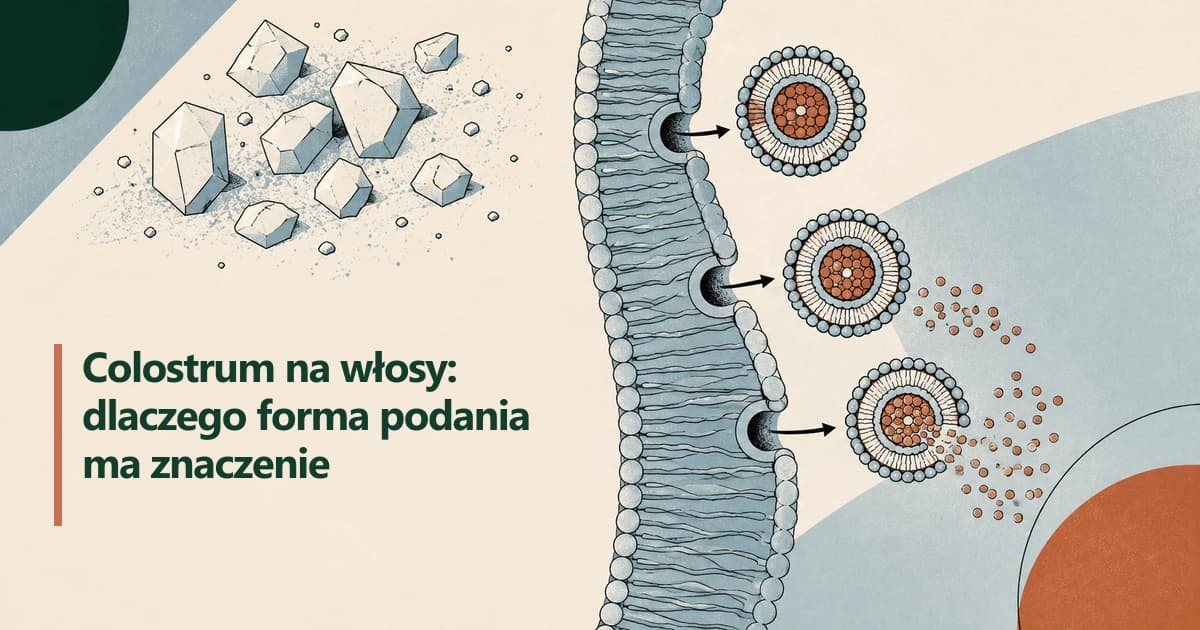
Does liposomal delivery resolve the uncertainty?
Skin limits the passage of many substances, particularly large proteins. Liposomes are small lipid vesicles used to carry ingredients. They can affect stability, release and distribution.
Some carrier studies show accumulation in hair follicles. This does not tell us how much colostrum from a particular serum reaches the follicle base. The carrier, ingredient and complete formula need to be assessed together.
Read more about the distinction between freeze-dried and liposomal colostrum.
What this means when choosing a cosmetic
A colostrum cosmetic can be assessed for scalp and hair care. Ingredient research does not replace evidence of regrowth from the finished product.
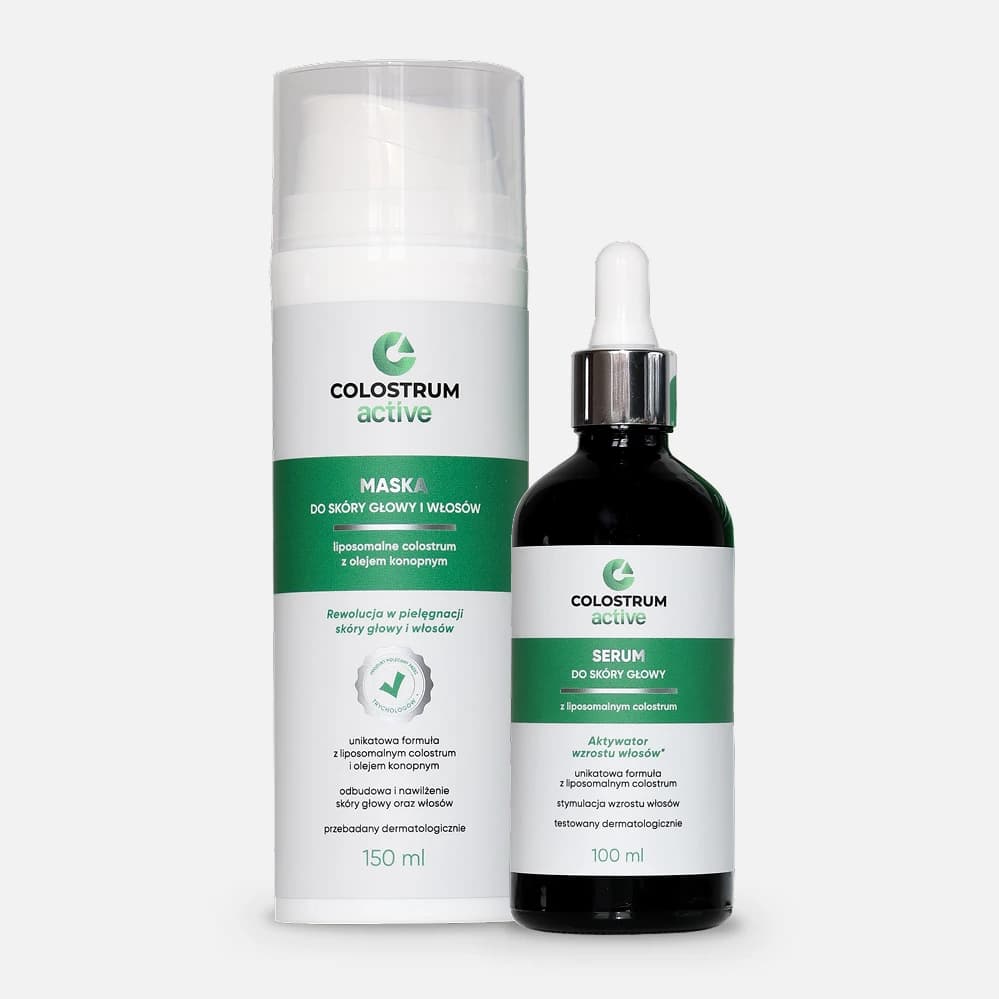
The serum and mask available from Trichovita contain liposomal bovine colostrum. They are cosmetics. Progressive thinning needs an assessment of its cause and, when appropriate, medical treatment.
Avoid bovine colostrum if you have a cow’s milk protein allergy. Trying a known allergen on a small patch of skin does not make it safe.
Common questions
Does colostrum treat androgenetic alopecia?
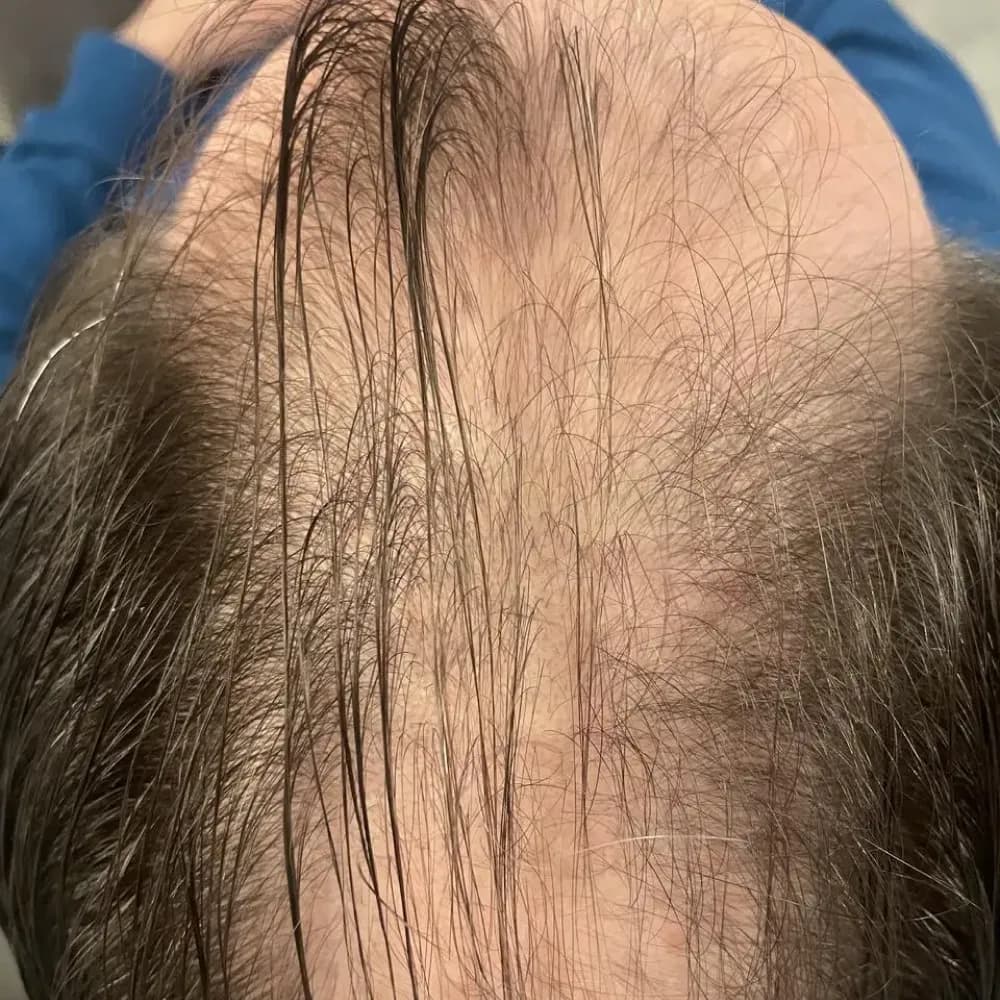
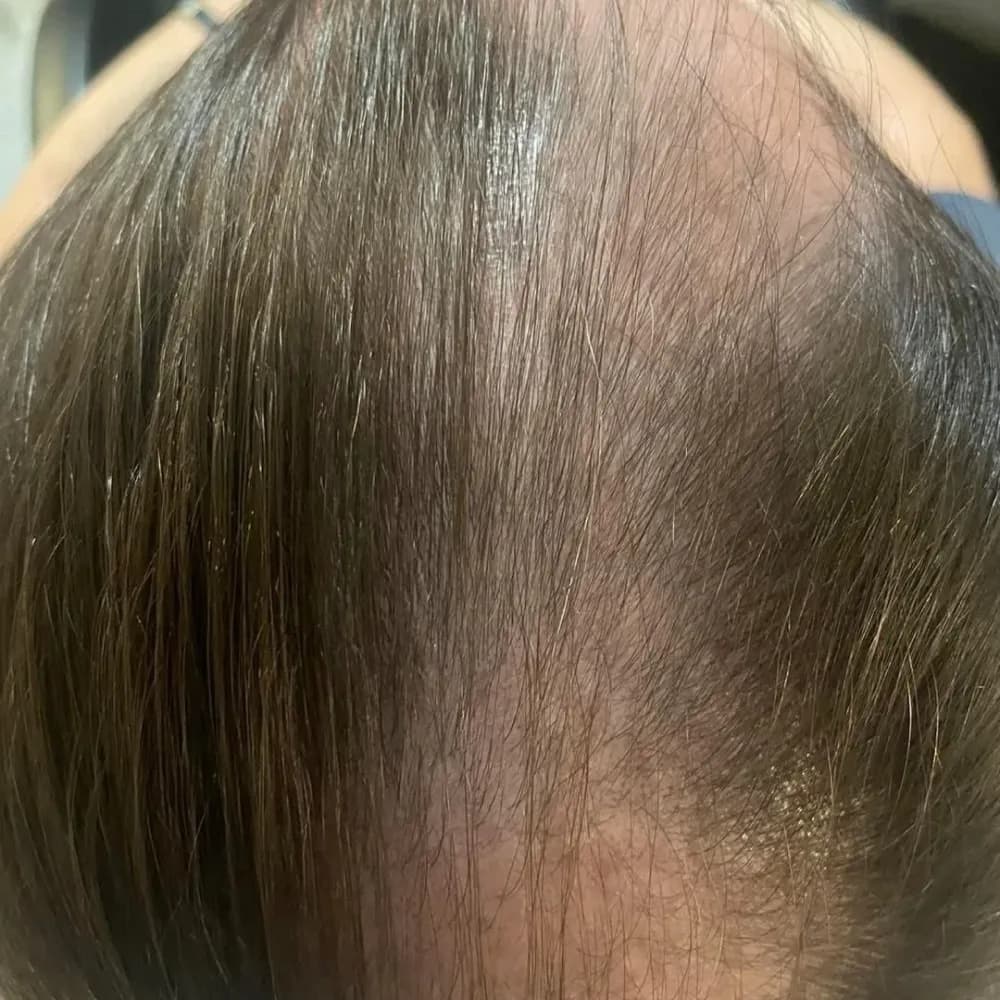
There is not enough clinical evidence to establish that it does. A widening part, receding hairline or thinning crown should be assessed by a dermatologist.
Is oral colostrum equivalent to a scalp product?
No. An oral product goes through the digestive system, while a cosmetic is applied to the skin. Findings from one route cannot simply be transferred to another.
When should new hair appear?
The studies discussed here do not establish a regrowth timetable for a colostrum cosmetic. Improved softness or scalp comfort is a different outcome from increased hair density.
Do colostrum peptides treat alopecia areata?
Research on immune processes does not establish that these peptides treat alopecia areata. Smooth patches without hair need a medical assessment.
Sources
- Yalçıntaş et al., Revealing the Potency of Growth Factors in Bovine Colostrum, 2024: PubMed.
- Hsieh et al., IGF-1 in Hair Regeneration: Mechanistic Pathways and Therapeutic Potential, 2025: PubMed.
- Huang et al., lactoferrin experiments in cells and mice, 2019: DOI.
- Milad et al., Role of Lactoferrin in Chronic Telogen Effluvium, abstract, 2020: DOI.
- Kim et al., Potential of Colostrum-Derived Exosomes for Promoting Hair Regeneration Through the Transition From Telogen to Anagen Phase, 2022: DOI.
- Nayak et al., follicular delivery research, 2024: PMC.
Educational material. This article is for informational purposes and does not replace consultation with a dermatologist or trichologist. Trichovita is a cosmetic care product - not a medicinal product and not a substitute for medical treatment. If you have a diagnosed scalp condition or persistent hair problems, please consult a specialist.

About the author
Mikolaj Szejnoga
Co-founder of Trichovita
Co-creator of the Trichovita brand, specialist in trichology and cosmetic formulation.
Visit author website