
40.5°C. That is what the thermometer hit in western Poland on Sunday — the highest temperature ever recorded in the country, roughly 105°F. The previous record had stood since 1921. For a whole week the news explained what such heat does to the body. What it does to your hair — almost no one mentioned.
It does plenty. The catch is that half the damage is invisible for now.
Hair reacts to heat on two tracks. The first you can already see in the mirror: dry ends, dullness, brittleness, color that faded faster than usual. The second is quiet and delayed — the extra shedding that, after a scorching July and August, shows up only in September. And that one surprises people the most, because by then no one connects it to summer.
This guide walks through all of it: what the sun does, what happens to your scalp, how a pool differs from the sea and from a lake, why the bill for a hot summer comes due in autumn, and what to actually do about it. Plenty of specifics, no scare tactics.
First, a map: two very different kinds of damage
To keep things straight, it helps to split "hair" into two things, because heat hits each one differently.
There is the hair shaft — what you see, comb and dry. It is dead tissue, keratinized, with no blood supply and no ability to repair itself. Whatever damages it stays there until you cut it off. The shaft takes the hit from sun, chlorine, salt and lake water.
And there is the scalp and its follicles — a living, blood-fed factory where new hair is made. Heat can literally burn it, flood it with sweat and, least obviously, reset its internal clock so that the consequence only shows up a quarter of a year later.
The first kind of damage is immediate. The second is delayed. Let's take both.
The sun: how UV breaks hair apart
People say the sun "dries out" hair. That is misleading. The shaft is dead — it doesn't dry out the way skin does. The sun doesn't dry it; it breaks it down chemically, exactly the way UV crumbles a plastic pot on a windowsill and bleaches the color out of an awning.
This happens on two levels at once.
The first is protein. Keratin is held together by sulfur bonds — tiny "rivets" between sulfur atoms that give hair its springiness. UV cuts those rivets and, at the same time, lifts the scales of the cuticle so that, instead of lying flat like roof tiles, they start to stick up. Hair turns rough, dull, staticky and frizzy. This isn't just a feeling — spectroscopy shows disulfide bonds breaking down after irradiation, with the cuticle flaking most at the edges. In one test, an unprotected strand lost more than 14% of its tensile strength after a dose of UV. That is the difference between a hair that survives brushing and one that ends up on the brush.
The second level is color. UV breaks down melanin, which is why hair is lighter after the holidays. And here's the catch: the hair that fades fastest is the hair with the least natural protection — blonde, gray and color-treated. If you dye your hair, the sun is the cheapest and most persistent lightener you'll ever meet. Roots show sooner, cool tones go brassy, and a fresh balayage can "walk off" in two weeks by the water.
| What UV does to hair | How you see and feel it |
|---|---|
| Cuts the sulfur bonds in keratin | Weaker, brittle, loses spring |
| Lifts and flakes the cuticle | Roughness, dullness, frizz, static |
| Breaks down melanin | Color fades, dye washes out fast |
| Hits blonde, gray and dyed hair hardest | Those age fastest in the sun |
It's worth adding that this isn't only ultraviolet. High air temperature, hot sand, hot air from a dryer and a flat iron all draw from the same well. In summer it's easy to overheat hair from several sources at once — which is why less is more.
Your scalp is getting a tan too
We think about hair. About the skin underneath it — almost never. Yet the scalp takes the worst of the heat, because hardly anyone puts sunscreen on it.
The thing is, the scalp is just skin, and it can burn like your nose or shoulders — especially where hair doesn't shade it: along the part, on the crown, in thinning areas. A sunburned scalp stings, feels tight and, a few days later, sheds in small flakes that are easy to mistake for dandruff and, on reflex, attack with a strong shampoo. That happens to be the worst thing you can do to irritated skin. And tanning an exposed scalp year after year strains it the same way it strains any other exposed part of the body.
The second blow is sweat. In heat above 30°C the scalp sweats heavily, and sweat isn't water — it's a salty, acidic liquid that shifts the skin's pH and irritates it.
The third is sebum, and this is where it gets interesting. Sebum itself isn't the enemy, but in heat there's more of it, and that sets off a chain. It feeds Malassezia, a yeast that naturally lives on the scalp. The yeast breaks the oils in sebum down into free fatty acids — including irritating oleic acid — and those products drive the inflammation that underlies dandruff and seborrheic dermatitis. The more sebum and warmth, the better that yeast lives. Which is why, for many people, summer is the season of more itching and flaking.
If that's you, first make sure what you're dealing with — because dandruff and seborrheic dermatitis are two different things and call for different approaches. And a scalp freshly burned and peeling from the sun shouldn't be confused with either of them, or attacked with an aggressive shampoo.
Water: pool, sea and lake are three different stories
In the heat we all rush to the water. Rightly so — but for hair, water can be harder than the sun, and for two reasons.
First, wet hair is more fragile on its own. Soaked with water it swells, loses its stiffness and is far easier to damage mechanically; the resistance when you comb it climbs sharply. In one study, the effect of water alone on hair's mechanical properties could exceed the damage from broken disulfide bonds. The takeaway is simple: don't drag a comb through wet hair, especially after swimming, and don't rub it with a towel. Second, every body of water has its own catch.
The pool and chlorine
The best evidence of what chlorine does to hair came from swimmers themselves. When Japan's national team was examined, more than 60% of the athletes had discolored hair — and not a single person in the control group did. Under the microscope their hair was almost stripped of its cuticle: friction with the water wore it away, while hypochlorous acid penetrated through the gaps down to the cortex and oxidized the pigment there.
It works on three levels, in order. First it strips off the thin layer of lipid that makes a healthy hair smooth and water-repellent; without it the scales stop lying flat and the hair soaks up everything like a sponge. Then it goes after the inside: the same sulfur bonds the sun cuts, chlorine oxidizes — and unlike water or heat, which act reversibly, it severs them for good. Finally, through the loosened cuticle, it reaches the core and destroys the pigment.
And those infamous green pool hairs? That's not chlorine. The green tint comes from copper in the plumbing and water-treatment products, which settles on hair that is light or already damaged. Chlorine is the accomplice, not the culprit: it loosens the cuticle that lets the copper latch on.
The sea and salt
Salt is hygroscopic — it pulls water out of the hair and leaves it stiff and dull. The crystals drying in the sun act like fine sandpaper with every turn of your head. And since UV has already loosened the cuticle, the salt gets in deeper. Sun and water don't add up — they multiply, which is why hair after a full day at the beach is often in worse shape than after sun or a swim alone.
The lake and cyanobacteria
Here, at 40°C, comes something a pool and the sea don't have. Still, warm, windless water is ideal for cyanobacteria ("blue-green algae") — and in such heat they can bloom in a lake within days.
You'll recognize them by eye and by nose: the water turns green or brown, streaks, foam or a scum appear on the surface, and the whole thing smells musty. If it looks like that, simply don't go in — contact with a bloom means itching, a rash and skin irritation, including on the scalp. On top of that, the lake's surface reflects the sun, so every hour in the water is a double dose of rays: from above and bounced off the water. And when you get out, everything that was floating in that water stays on your hair and scalp.
| Body of water | Main problem for hair | What helps |
|---|---|---|
| Pool | Chlorine oxidizes cuticle, protein and pigment | Wet hair before, rinse after, chelating shampoo if you swim often |
| Sea | Salt dehydrates and abrades | Rinse with fresh water after, then hydrate |
| Lake | Cyanobacteria + reflected sun | Don't enter a bloom; rinse hair and scalp after getting out |
Whatever the water, one rule works surprisingly well: wet your hair with clean water before you go in. A strand already swollen with fresh water soaks up far less chlorine and salt — like a sponge that's already full and can't take on any more. After you get out, rinse as soon as you can, and if you swim in chlorine often, reach now and then for a chelating shampoo that binds chlorine and metals.
The invisible part: why your hair falls out in autumn
Now for the most interesting bit — and the most overlooked. Because the most serious mark left by heat isn't on the shaft but in the follicle, and it won't show today; it shows in two or three months.
Every hair lives in a cycle. It grows for a few years (the anagen phase), then briefly pauses, then enters a roughly three-month resting phase (telogen) and falls out. At any moment a dozen-or-so percent of hairs are in that resting phase — which is why losing 50–100 a day is normal, not a cause for alarm.
But the cycle has a seasonal rhythm few people know about. Swiss researchers tracked the hair of 823 healthy women over six years and found that the share of hairs in the resting phase is highest in summer. Since the resting phase lasts about three months, hairs "dismissed" in the July heat don't fall right away — they fall in September and October. That's the autumn panic over the brush, blamed on going back to the office. It isn't the office. It's a delayed echo of summer.
You can even see it in search engines. An analysis of twelve years of Google queries showed that we type "hair loss" in a clear seasonal rhythm, peaking in the warm and autumn months; in another review of dermatology searches, hair loss was the second most-searched topic worldwide, with most symptoms peaking precisely in the warm season.
Two things are worth saying honestly. First, this is a mild, temporary mechanism — the same one quietly triggered by intense stress or a fever. For the follicle, heat is just another strong stimulus, and afterward the hair usually grows back, because the follicles don't die — they shift into an extended rest. Second, this shedding is diffuse, from the whole head. If instead you see a receding part or smooth bald patches, or if the shedding doesn't ease after a few weeks and drags on past six months, that's no longer "the season" and it's time to see a trichologist or dermatologist.
Hair cycle calculator
Find out which colostrum ingredients support your hair type
Select the characteristic closest to you — we will show which active ingredients from bovine colostrum are relevant in daily care and the approximate time to the first visible results (based on scientific research). Educational material: does not replace consultation with a trichologist or doctor.
Who heat hits hardest
Not everyone starts from the same place. If you belong to one of these groups, watch your hair more closely in summer:
- Colored, bleached or balayaged hair. Less pigment and more "open" spots — it fades faster and grabs copper from the pool more easily.
- Blonde and gray hair. Less melanin means less natural shielding from UV.
- Fine, porous hair. It soaks up more water, chlorine and salt, and dries out faster.
- Curly and very dry hair. Its cuticle is naturally less sealed, so sun and water act on it more strongly.
- Anyone with thinning or hair loss. Fewer hairs means more exposed scalp to burn.
- Frequent swimmers and holidaymakers. Sun, salt and chlorine at once, day after day — that combination is exactly what turns hair into "holiday straw."
The plan: how to protect your hair in the heat, step by step
Good news: protection doesn't take ten products or sacrifices. It takes a handful of habits, ordered from most important.
1. A head covering comes first. A hat, a scarf or a light, tightly woven cap shields both at once: the shaft from rays and the scalp from burning — and it's the only thing that truly protects the part. No spray beats it. The denser the weave and wider the brim, the better.
2. UV protection where the hat doesn't reach. Leave-in products with UV filters and antioxidants genuinely limit damage — in studies, strands protected this way withstood the sun better than unprotected ones. Apply them to damp hair before going out, with extra attention to the ends and colored lengths. Just remember there's no regulated "SPF" for hair — this is an add-on to the hat, not a replacement.
3. Disarm the water. Before the pool, the sea or a lake, wet your hair with clean water, ideally with a little conditioner as a barrier. Rinse it right after, and wash gently at home. If you swim in chlorine often, use a chelating shampoo now and then.
4. Wash more often, but more gently — not the other way around. Scrubbing daily with a harsh shampoo in the heat irritates the skin and ramps up oiliness. Frequent but gentle washing is better; we broke this down in our piece on how to actually wash your hair.
5. Handle wet hair gently. Wet hair is at its most fragile, so don't force a comb through it or rub it with a towel — press and blot it, and detangle with a wide-tooth comb starting from the ends.
6. Cool the water down and ease off hot styling. Lukewarm water for the final rinse, less blow-drying and flat-ironing. In summer hair dries on its own in minutes — a good moment to give it a break from extra heat.
7. Tie it up loosely. A tight, sweaty ponytail day after day, tugged on top of everything, overloads the follicles and over time risks traction hair loss. Choose loose styles, soft ties, breathable looks. And don't go to sleep with a wet, sweaty scalp under tightly pinned hair.
8. Drink water and eat protein. Hair is largely protein, and the scalp works better in a well-hydrated body. Restrictive holiday diets can, incidentally, trigger shedding on their own, so this isn't the moment for crash diets.
9. Cut what can't be saved. No product will repair ends scorched by sun and chlorine — the shaft is dead. Sometimes the healthiest thing to do after summer is to trim the damaged ends and start with a clean slate.
There's also room for a care product. After a day full of sun, sweat and swimming, the scalp likes something soothing, and parched lengths like moisture. Trichovita's serum and mask with liposomal colostrum work exactly here: the liposomes help carry actives deeper into the skin, and colostrum brings growth factors and lactoferrin that support its comfort. No empty promises — a cosmetic won't reverse seasonal shedding or replace a hat. It's a complement to good care, not a shield against the sun.
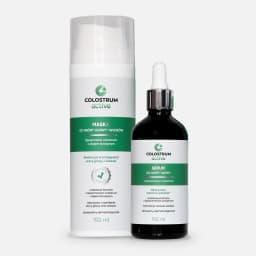
Colostrum Active: Bundle Serum + Regenerating Mask
A complete set for scalp and hair regeneration.
Frequently Asked Questions
Does summer heat and sun cause hair loss?
Indirectly, yes. Heat itself doesn't pull hair out, but summer — through sun, high temperatures, salt and chlorine — acts on the follicle as a strong stressor and pushes more hairs into the resting phase. That phase ends in shedding only after about three months, so it usually shows up in September and October. It's a seasonal rhythm, not a disease, and for most people it passes on its own.
Why is my hair shedding more in autumn after summer?
It's a delayed echo of summer. The share of hairs entering the resting (telogen) phase is highest in the summer months, and that phase lasts about three months before the hairs fall out — which lands the shedding in September and October. So we tend to worry about our hair in autumn, even though the "push" into rest happened back in summer.
How long does seasonal hair shedding last?
Usually a few weeks — most often around six to eight — and it settles on its own once the follicles return to their normal cycle. During that window you may lose a little more than the usual 50–100 hairs a day. If the heavier shedding drags on beyond two to three months, or doesn't ease despite good care, see a trichologist or dermatologist.
How do I protect my hair from the sun in summer?
A head covering is most effective — a hat or scarf protects hair and scalp at once, including the part. Back it up with a leave-in UV product on the ends and colored lengths, cut down on hot styling (dryer, flat iron), and avoid the sun during peak hours. There's no regulated "SPF" for hair, so the hat stays number one.
How do I protect my hair from chlorine at the pool?
Work in three steps. Before you get in, wet your hair with clean water — ideally with a little conditioner or oil as a barrier — so the swollen strand absorbs far less chlorine; a well-fitted silicone swim cap helps too. As soon as you're out, rinse with clean water and wash with a gentle shampoo. If you swim often, use a chelating (clarifying) shampoo now and then to lift chlorine and metal buildup.
Why does hair turn green after the pool, and how do I remove it?
The green tint isn't the chlorine itself but copper in the pool water, which settles mainly on light, bleached and already-damaged hair. Chlorine just loosens the cuticle so the copper can latch on. To remove it, use a chelating shampoo that binds metals, plus a toner or purple shampoo if needed; to prevent it, pre-wet and protect your hair before swimming and rinse it right after.
What should I do with my hair after swimming in a lake?
Rinse your hair and scalp with clean water as soon as you can, then wash with a gentle shampoo at home. In the heat, lakes can bloom with cyanobacteria — if the water is murky, green, covered with scum or smells bad, don't go in and check the local water-safety notices. Contact with a bloom can irritate the skin, including on the scalp.
When should hair shedding be a concern?
When it goes beyond the mild, seasonal pattern. Warning signs are shedding that lasts more than six months, a visibly thinning or receding part, smooth bald patches, or no identifiable trigger. In those cases — or when the loss is really affecting how you feel — see a trichologist or dermatologist; a proper diagnosis, including trichoscopy, is the starting point for any effective treatment.
In closing
The record will likely be broken again. Your hair doesn't get a vote — but you can make this heat noticeably easier on it.
Remember three things. The sun doesn't dry hair, it breaks it down, so prevention beats rescue after the fact. Water in the heat can be tougher than the sun itself, and at a lake you should watch the surface, not just the thermometer. And the autumn shed after a hot summer is usually a mild echo, not a catastrophe — unless it's patchy or drags on for months, in which case it's one for a specialist.
The rest is shade, a hat and a bit of patience. Hair well shielded through a summer like this goes into autumn in far better shape. If you'd like to see how calm, consistent care translates into results, we've gathered real stories from our clients.
Sources
Temperature record data: IMGW-PIB (Słubice, Poland, 28 June 2026, 40.5°C). Information on cyanobacteria: public-health authority guidance. The section on hair and scalp biology draws on peer-reviewed scientific publications (data from PubMed):
- Kunz M, Seifert B, Trüeb RM. (2009) — Seasonality of hair shedding in healthy women complaining of hair loss. Dermatology 219(2):105–110. DOI: 10.1159/000216832
- Hsiang EY, Semenov YR, Aguh C, Kwatra SG. (2018) — Seasonality of hair loss: a time series analysis of Google Trends data 2004–2016. British Journal of Dermatology 178(4):978–979. DOI: 10.1111/bjd.16075
- Kamiński M, Tizek L, Zink A. (2021) — "Dr. Google, What Is That on My Skin?" — Internet Searches Related to Skin Problems: Google Trends Data from 2004 to 2019. International Journal of Environmental Research and Public Health 18(5):2541. DOI: 10.3390/ijerph18052541
- Dario MF, Baby AR, Velasco MVR. (2015) — Effects of solar radiation on hair and photoprotection. Journal of Photochemistry and Photobiology B: Biology 153:240–246. DOI: 10.1016/j.jphotobiol.2015.09.025
- Fedorkova MV, et al. (2016) — Photoinduced formation of thiols in human hair. Journal of Photochemistry and Photobiology B: Biology 164:43–48. DOI: 10.1016/j.jphotobiol.2016.09.021
- Fan J, et al. (2025) — Performance and Mechanism of Hydrolyzed Keratin for Hair Photoaging Prevention. Molecules 30(5):1182. DOI: 10.3390/molecules30051182
- Leite MGA, Maia Campos PMBG. (2018) — Photoprotective Effects of a Multifunctional Hair Care Formulation Containing Botanical Extracts, Vitamins, and UV Filters. Photochemistry and Photobiology 94(5):1010–1016. DOI: 10.1111/php.12932
- Nanko H, et al. (2000) — Hair-discoloration of Japanese elite swimmers. The Journal of Dermatology 27(10):625–634. DOI: 10.1111/j.1346-8138.2000.tb02243.x
- Mascaró JM, et al. (1995) — Green hair. Cutis 56(1):37–40. PubMed
- Adalsteinsson JA, et al. (2020) — An update on the microbiology, immunology and genetics of seborrheic dermatitis. Experimental Dermatology 29(5):481–489. DOI: 10.1111/exd.14091
- Liu F, et al. (2026) — Enhancing properties of damaged hair through moisture control via construction of highly hydrophobic surface. Colloids and Surfaces B: Biointerfaces 261:115427. DOI: 10.1016/j.colsurfb.2026.115427
Educational material. This article is for informational purposes and does not replace consultation with a dermatologist or trichologist. Trichovita is a cosmetic care product — not a medicinal product and not a substitute for medical treatment. If you have a diagnosed scalp condition or persistent hair problems, please consult a specialist.
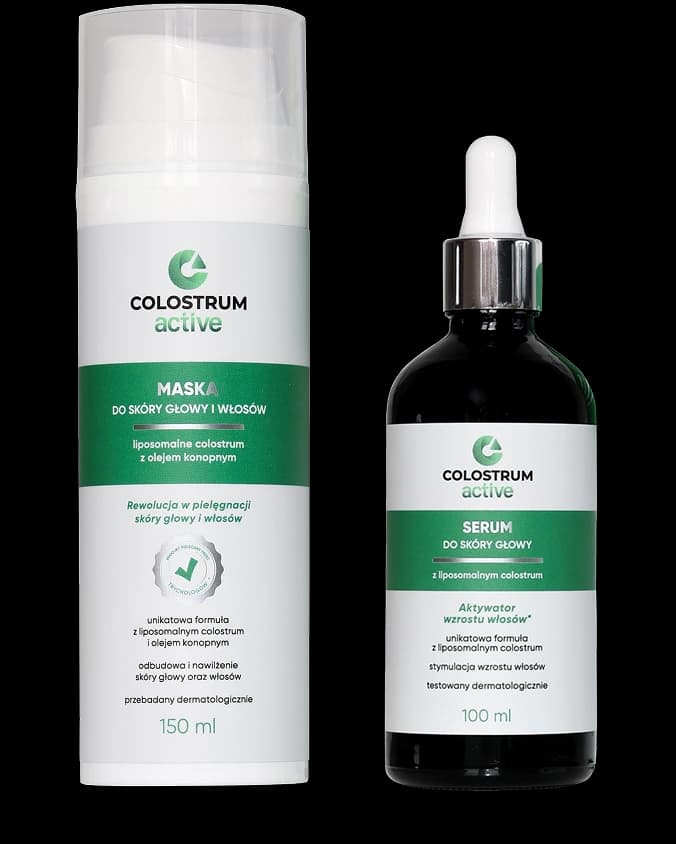
Discover our products!
We created them with real trichological patient problems in mind.

About the author
Mikolaj Szejnoga
Co-founder of Trichovita
Co-creator of the Trichovita brand, specialist in trichology and cosmetic formulation.
Visit author website