Google "colostrum for hair" and you will find two types of pages. Some promise miracles: "hair grows 3x faster!" Others say it is all marketing and nothing more.
The truth? It lies somewhere in between. And it is far more interesting than either version.
I decided to tackle this topic honestly. I read over a dozen scientific publications, from Frontiers to the Journal of Investigative Dermatology, and extracted what is actually known. Without exaggeration in either direction.
What Exactly Is Bovine Colostrum?
Colostrum is the first secretion that a cow (or any mammal) produces after giving birth. It is not yet milk. It is a concentrate of biologically active substances with one purpose: to give the newborn a powerful immunological and growth jumpstart.
Why are trichologists interested? Because colostrum is a natural source of growth factors, the very same ones that regulate the hair life cycle. Here is what it contains:
| Component | What it does for hair | How much is there |
|---|---|---|
| IGF-1 | Wakes up "dormant" hair follicles | 4x more than in milk |
| EGF | Stimulates proliferation of cells responsible for growth | 2–3x more than in milk |
| TGF-beta | Regulates the hair growth cycle | High concentration |
| Lactoferrin | Reduces inflammation, activates growth | 1.5–5 mg/ml |
| Immunoglobulins | Protect the scalp | 50–150 mg/ml |
| Proline-rich polypeptides | Regulate the immune system | Unique, only in colostrum |
Sounds promising. But what does the science say?
IGF-1: The Growth Factor That Balding Scalps Lack
To understand why IGF-1 is so important, you need to know one thing about hair: whether a hair grows or falls out is decided by tiny cells at the base of the follicle, the dermal papilla. That is where the entire game plays out.
And this is where IGF-1 comes in. It is a growth factor that these cells produce naturally. The problem? Scientists discovered that cells from balding areas produce significantly less of it than cells from healthy scalp areas (Panchaprateep and Kheolaiad, 2014). In other words, where you are going bald, IGF-1 is lacking.
What does IGF-1 do in the hair follicle? Three key things:
- Wakes follicles to life: stimulates the transition from the resting phase (telogen) to the growth phase (anagen)
- Protects cells from death: inhibits apoptosis, so the growth phase lasts longer
- Improves circulation: increases VEGF production, which means more oxygen and nutrients reaching the follicles (Liu et al., 2025)
And bovine colostrum? It contains IGF-1 at a concentration 4 times higher than mature milk. It is a natural, concentrated package of the very growth factor that balding follicles are missing.
Lactoferrin: This Ingredient Will Surprise You
For years, lactoferrin was seen as an "antibacterial protein from milk", useful, but nothing spectacular. Then in 2019, Korean scientists did something simple: they gave it to mice and watched what happened to their hair.
The result? Lactoferrin stimulated hair growth, in both young and old mice (Park et al., 2019). This matters because most substances work less effectively in older organisms.
But what really surprised me was the mechanism. Lactoferrin does not work "from the outside" like a regular cream. It penetrates to the lower part of the hair follicle and directly reaches the dermal papilla cells, exactly where the growth decisions are made.
What does it do there? It activates three signaling pathways simultaneously:
- Erk/Akt: proliferation of papilla cells
- Wnt/beta-catenin: initiation of a new growth cycle (this is the same pathway activated by minoxidil)
- Induction of Wnt3a and Wnt7a proteins: direct growth stimulators
Preliminary clinical data also suggest a beneficial effect in patients with chronic telogen effluvium (Oxford Academic, 2020). Human studies are still limited, but the direction is promising.
Exosomes From Colostrum: This Is Where It Gets Really Interesting
If I had to point to one study from recent years that truly changed my thinking about colostrum, it would be this one.
In 2022, a Korean research team isolated exosomes from bovine colostrum, microscopic vesicles (30–150 nanometers) that cells use for intercellular communication. Think of them as biological "parcels" filled with growth factors, RNA, and proteins.
What happened when these exosomes were applied to human hair follicles in the lab?
- Dermal papilla cells began to proliferate intensively
- Exosomes rescued follicles inhibited by DHT, the very hormone that causes androgenetic alopecia
- In mice, they induced hair regrowth comparable to minoxidil, but without the side effect of skin rash
- They activated the Wnt/beta-catenin pathway, responsible for "waking up" dormant follicles
And in 2024? Colostrum exosomes were compared with stem cell exosomes (the "trendier," more expensive ones). The result? Colostrum performed better: greater growth and dermal papilla regeneration.
Why the Delivery Method Matters More Than the Ingredient Itself
You could have the best growth factor in the world, but if it does not reach its target, it is useless. And the target sits 3–4 millimeters below the skin surface, in the lower part of the hair follicle.
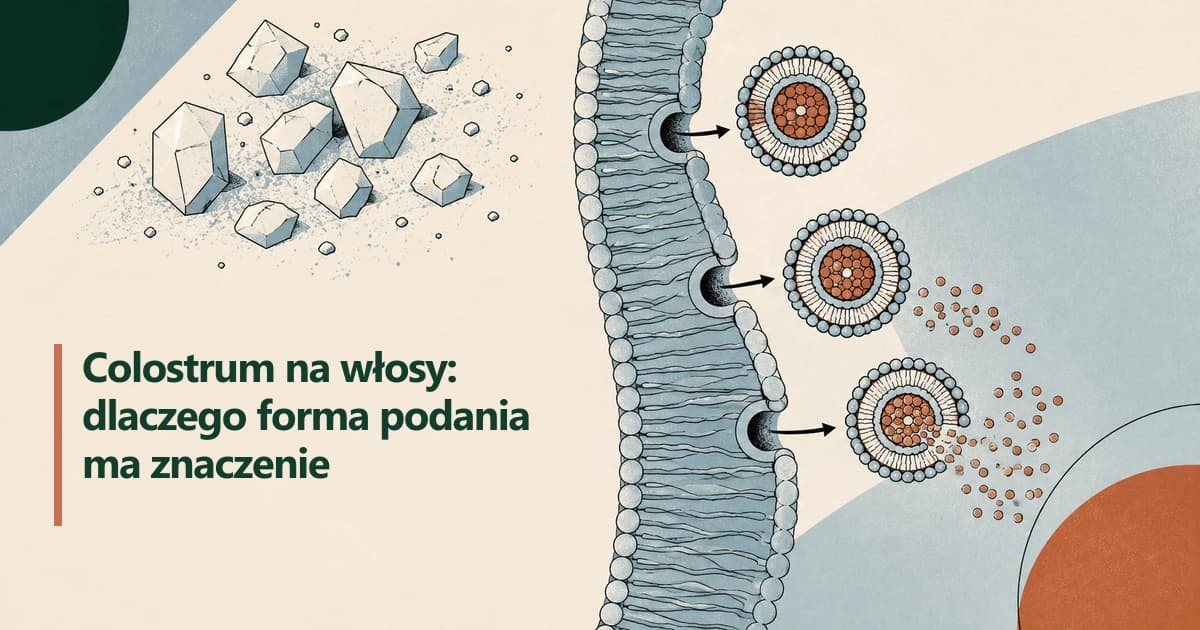
A regular cream or serum? Most of the ingredients stay on the surface. Penetration into the follicle is just 5–15%. The rest sits on the skin doing nothing.
Liposomes changed this game. These are microscopic capsules made of lipids, built almost identically to natural cell membranes. Thanks to this "biomimetic" structure, they penetrate through the skin barrier and accumulate selectively in hair follicles. A pioneering 1997 study (Li and Hoffman) showed this under the microscope: liposomes targeted the follicles while barely entering the bloodstream or surrounding epidermis.
Newer research confirms this even more strongly: nanoparticles coated with liposomes penetrated follicles significantly deeper than uncoated particles (Nayak et al., 2024). And liposomes loaded with minoxidil proved more effective than minoxidil in a standard solution (Elhabak et al., 2025).
| How you apply it | How much reaches the follicle | How long it works | Side effects |
|---|---|---|---|
| Regular cream | 5–15% | Short-lived | Possible |
| Liposomal formula | 40–70% | Long-lasting | Minimal |
| Ultradeformable liposomes | 60–85% | Very long-lasting | Negligible |
That is why the liposomal formula matters so much. It is not marketing. It is the physics of active ingredient delivery.
Proline-Rich Polypeptides: The Key to Autoimmune Hair Loss
There is one more colostrum ingredient that few people talk about, but which could be hugely significant for people with alopecia areata.
Proline-rich polypeptides (PRP, also known as Colostrinin) are a peptide complex unique to colostrum. You will not find it in any other natural source. What do they do?
They regulate the immune system. Specifically, they balance the Th1/Th2 response, inhibit overproduction of reactive oxygen species, and modulate cytokines (Janusz et al., 2008).
Why does this matter? Because alopecia areata is an autoimmune disease: your own immune system attacks the hair follicles. A substance that can "calm" the immune system without shutting it down is something trichology has been waiting for.
Find Out What Can Help in Your Case
Every type of hair loss has a different mechanism, and different colostrum components will be most relevant. Below you will find a tool that shows specific recommendations based on your problem.
Hair cycle calculator
Find out which colostrum ingredients support your hair type
Select the characteristic closest to you — we will show which active ingredients from bovine colostrum are relevant in daily care and the approximate time to the first visible results (based on scientific research). Educational material: does not replace consultation with a trichologist or doctor.
If you came here looking for a practical routine rather than the science alone, read how to wash your hair properly, liposomes in hair care and postpartum hair loss.
Frequently Asked Questions
Is bovine colostrum safe for the scalp?
Yes. Topical application of colostrum has been used in dermatology for decades, including burn-wound studies, with no elevated rate of allergic reactions. The proteins are species-specific to cow, not human, so the immune system treats them as inert. The only caveat is for people with a confirmed dairy-protein allergy.
Will colostrum work for androgenetic alopecia?
Colostrum supports the mechanism, the IGF-1 deficit in balding follicles, but it does not block DHT the way finasteride does, nor dilate vessels the way minoxidil does. Use it as a complementary supportive layer, not a replacement. For advanced androgenetic alopecia, see a dermatologist for pharmacological treatment first.
How is topical colostrum different from oral colostrum supplements?
Completely different mechanism. Oral colostrum is digested: most of the growth factors are broken down by stomach acid before they reach systemic circulation. Applied directly to the scalp and protected by a liposome, the same proteins can act locally on the dermal papilla. For hair specifically, topical delivery is the only route validated in trichology research.
How long before I can see results?
The biological response is gradual: the skin barrier responds within 1–2 weeks, the hair growth cycle in 4–6 weeks, visible density changes in 3–6 months. This is not because colostrum is slow. It is because hair itself grows about 1 cm per month. Anyone promising visible results in 7 days is selling a faster timeline than biology allows.
Why does colostrum need to be in liposomes?
Two reasons. The active ingredients (proteins and peptides) are fragile: exposed to oxygen, pH and enzymes in a water-based formula they break down within hours. And the scalp's outer layer repels water-based formulas, so most of the colostrum slides off without ever reaching the follicle. A liposomal shell protects the ingredient and delivers it through the lipid bilayer of skin cells to the target.
So, Does Colostrum Work for Hair?
Time for an honest answer.
Yes, but with caveats.
The preclinical data is genuinely promising. IGF-1 compensates for the growth factor deficit in balding follicles. Lactoferrin activates growth pathways previously associated only with minoxidil. Exosomes from colostrum induced regrowth comparable to pharmaceuticals, without their side effects. And the liposomal formula ensures these ingredients actually reach where they should.
At the same time, let us be honest, large, multi-center clinical trials in humans are still limited. Colostrum is not a "miracle cure for baldness." It will not replace pharmacological treatment in advanced cases.
But as a supportive treatment, especially in a liposomal formulation that ensures real delivery of ingredients to the follicles, it has strong, scientifically grounded foundations. And that is not marketing. Those are conclusions from over a dozen peer-reviewed publications.
Key takeaways
- Colostrum bovinum is a natural concentrate of IGF-1 (4× milk), EGF (2–3× milk), TGF-β and lactoferrin: the same growth factors a balding scalp lacks.
- Preclinical evidence is strong: 12+ peer-reviewed publications, including exosome regrowth data comparable to minoxidil (Bae et al. 2022).
- Large human trials remain limited, so colostrum is supportive care, not a substitute for dermatological treatment in advanced alopecia.
- Delivery matters more than dose: in a non-liposomal formula most of the colostrum stays on the skin and never reaches the follicle.
References
This article is based on 12 peer-reviewed scientific publications, including:
- PMC (2024): Revealing the Potency of Growth Factors in Bovine Colostrum. PMID: 39064802
- Panchaprateep R, Kheolaiad J. (2014): IGF-1 in androgenetic alopecia. Experimental Dermatology
- Trueb RM (2018): Effect of IGF-1 on Hair Growth. Skin Appendage Disorders
- Liu et al. (2025): IGF-1 in Hair Regeneration. PMID: 41020895
- Park SY et al. (2019): Lactoferrin promotes hair growth. Acta Biochimica Polonica
- Oxford Academic (2020): Lactoferrin in Chronic Telogen Effluvium. QJM
- Bae G et al. (2022): Colostrum-Derived Exosomes for Hair Regeneration. Frontiers in Cell and Dev. Biology
- bioRxiv (2024): Colostrum exosomes vs MSC exosomes
- Li L, Hoffman RM (1997): Liposome delivery to hair follicles. J Invest Dermatol
- Nayak D et al. (2024): Ultradeformable Liposomes for Follicular Delivery. PMC11595114
Full list available on request: write to us at kontakt@trichovita.pl.

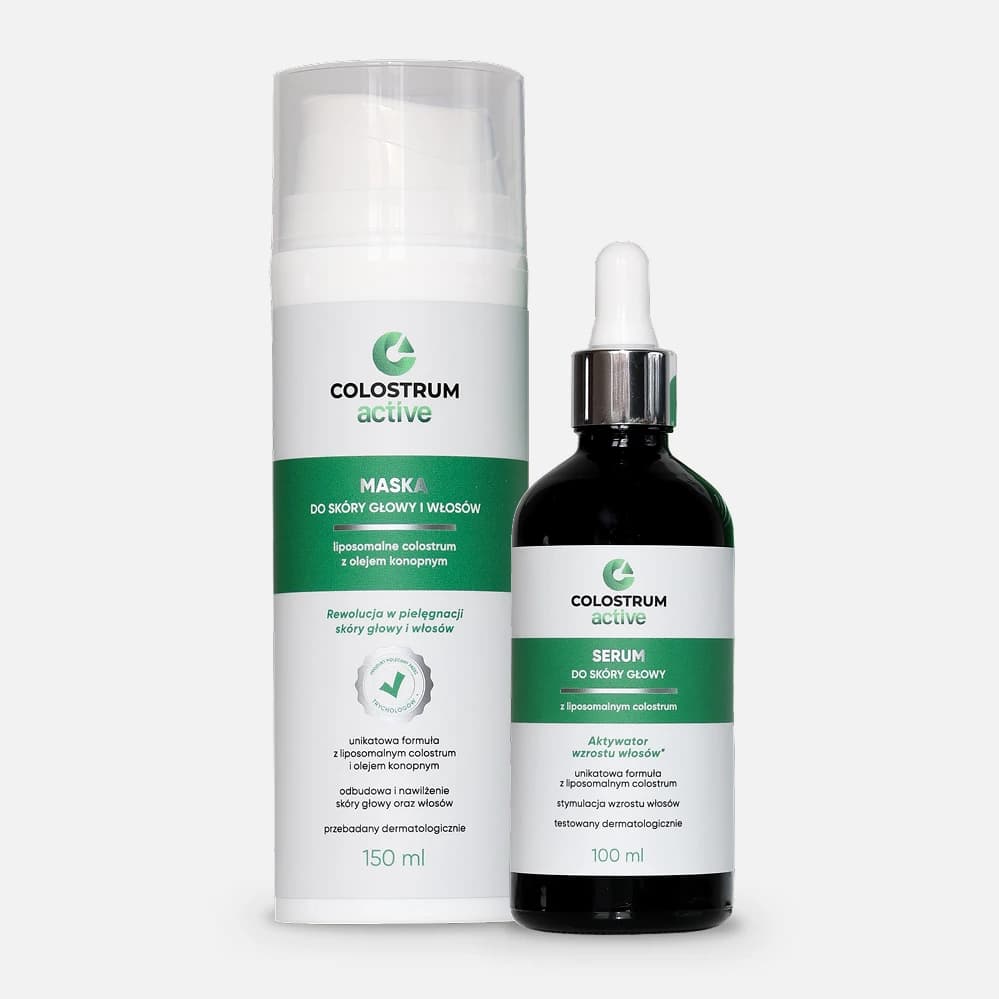
Colostrum Active: Bundle Serum + Regenerating Mask
A complete set for scalp and hair regeneration.
Educational material. This article is for informational purposes and does not replace consultation with a dermatologist or trichologist. Trichovita is a cosmetic care product — not a medicinal product and not a substitute for medical treatment. If you have a diagnosed scalp condition or persistent hair problems, please consult a specialist.
Discover our products!
We created them with real trichological patient problems in mind.

About the author
Mikolaj Szejnoga
Co-founder of Trichovita
Co-creator of the Trichovita brand, specialist in trichology and cosmetic formulation.
Visit author website